


Top 101 Comics of 2025

 25. Paul Auster’s The New York Trilogy
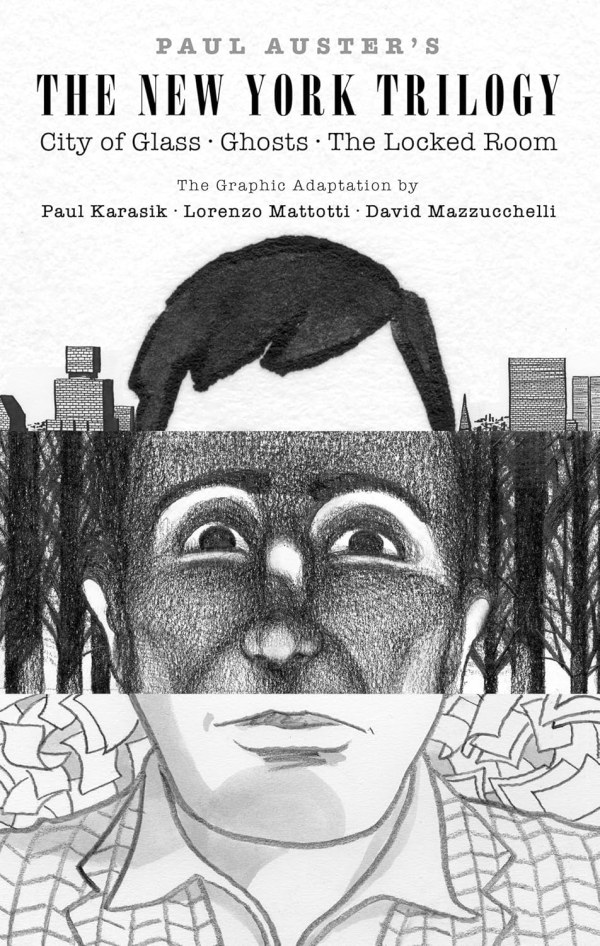 25. Paul Auster’s The New York Trilogy
Writer: Paul Auster (story), Paul Karasik, David Mazzucchelli
Artist: Paul Karasik, David Mazzucchelli, Lorenzo Mattotti
Publisher: Pantheon Books
Solicitation: The New York Trilogy is post-modern literature disguised as Noir fiction where language is the prime suspect. An interpretation of detective and mystery fiction, each book explores various philosophical themes. In City of Glass, an author of detective fiction investigates a murder and descends into madness. Ghosts features a private eye named Blue, trailing a man named Black, for a client called White. This too ends with the protagonist’s downfall. And in The Locked Room, another author is experiencing writer’s block, and hopes to brake it by solving the disappearance of his childhood friend. The second two parts of this trilogy will be appearing in this volume for the very first time as a graphic novel.
Paul Karasik, the mastermind behind the three adaptations, art directed all three books. City of Glass is illustrated by the award-winning cartoonist David Mazzucchielli, the second volume, Ghosts, is illustrated by New Yorker cover artist, Lorenzo Mattotti, and The Locked Room is adapted and drawn by Karasik himself. These adaptations take Auster’s sophisticated wordplay and translate it into comicsplay: both highbrow and lowbrow and immensely fun reading.
Why it Made the List: The trilogy is now complete. In 1994 Paul Auster’s novel City of Glass was adapted into a graphic novel and received near universal praise. That story was the first of Auster’s New York Trilogy. It remained the only adaptation for decades. Now the trilogy has been completed with some pretty legendary comic book names.
When it comes to the act of adaptation the big question is why does this story need to be told in a different format. For this work I think there’s a number of answers. First call me a philistine but I was not aware of Paul Auster’s work prior to this. So on the basic level it functions as a way of exposing his story to a brand new audience.
Beyond that though this is work that is so apt of adaptation because so much of the core of these stories is about observation and perspective. They start off simple enough. City of Glass is about a struggling writer who gets mistaken for a Private Investigator. His curiosity along with desire to write a new story get him involved into a situation he was not at all prepared. Ghosts is about a Private Detective hired to track another agent, and The Locked Room about a Man who becomes absorbed into the life of his childhood friend who disappeared. He begins living his life including writing the stories he never completed.
Each is layered with meta commentary regarding the act of storytelling and what it means to recreate life within your own words. Seeing Paul Auster’s work now going through a similar process with a multitude of creators is a way to emphasize the exact purpose of those stories and provide even more opportunity to reevaluate the process of storytelling.
Each story has a different creative team. The Original City lights by Paul Karasik is included with art by David Mazzucchelli, Now this is a very different Mazzucchelli than what you saw with Year One or Born Again. More akin to his linework in Asterios Polyp. There’s just a much softer line but his knack for character work and storytelling has not lost a step. Ghosts is done by Paul Karasik and Lorenzo Mattotti and has a more comics prose approach. It has one still image accompanied with related text. The Locked Room is done solely by Paul Karasik and is more indicative of City Lights both in the linework and page design.
As a major fan of the work of Ed Brubaker and Sean Phillips along with the crime genre in general this was like going back to the source of where their knowledge of the genre comes from. Now, I do not know how much influence Paul Auster was on them but if you are a fan of their work there is much to be gained reading this. It is undoubtedly complex with some abstract ideas that seem purposefully convoluted. That is another positive for this format as it makes things a bit more digestible.
 24. Dr. Werthless: The Man Who Studied Murder (And Nearly Killed the Comics Industry)
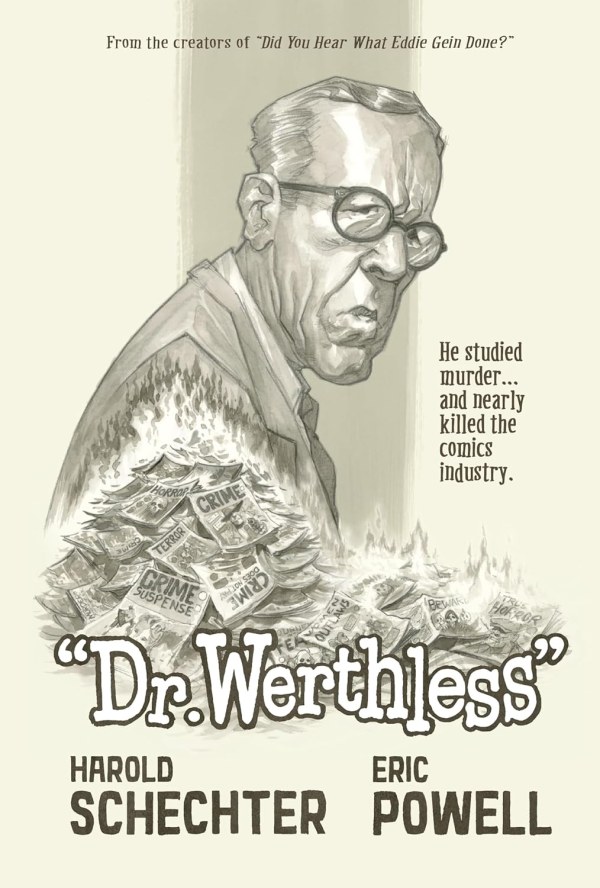 24. Dr. Werthless: The Man Who Studied Murder (And Nearly Killed the Comics Industry)
Writer: Eric Powell, Harold Schechter
Artist: Eric Powell
Publisher: Dark Horse
Solicitation: From the creative team behind the award-winning “Did You Hear What Eddie Gein Done?” comes an examination of one of the most polarizing figures in pop culture, Dr. Fredric Wertham.
Reviled by comic book fans as a witch-hunting zealot who stirred up a panic among the parents of America for his own self-promoting purposes, he was also a renowned psychiatrists who, among other accomplishments, opened a clinic in Harlem for disadvantaged African-American patients and played an important role in the desegregation of the nation’s schools. Believing that murder could be abolished through a proper understanding of the mental and social roots of criminal violence, he took a genuinely humane approach to some of the most notorious homicidal maniacs of his time, while simultaneously exploiting their stories for his own commercial ends.
Acclaimed true crime author, Harold Schechter, and multiple Eisner award winning cartoonist, Eric Powell, present a graphic novel that takes an unbiased look at this flawed and enormously and complex man — whose obsessive dream of freeing the world from violence nearly murdered the comics industry.
Why it Made the List: There are few people that have more impact on the medium of comics than Fredric Wertham despite never creating a comic book himself. His book The Seduction of the Innocent lead to the comic book industry becoming enemy number one nearly killing the industry. Also having the lasting impact of establishing the Comics Code of Authority. Harold Schecther and Eric Powell’s Dr. Werthless takes a look at the man behind the book to better understand who he was and what led him to target comics in the first place.
Hard to ignore the irony of a comic book being made about Fredric Wertham considering the history but if you were thinking this was designed as this revenge fantasy takedown of the man who nearly killed comics you would be mistaken. This is not a tabloid hit piece disguised as a biography. It is rather an honest look at a historical figure that is far more complex than I realized.
Wertham certainly had his faults. He was often despised by his fellow students and doctors. He struggled to find work in his early career. Yet at the same time he had a level of humanity about him that rarely gets discussed. He would treat his patience no matter their history, crime, or sexual orientation as people first rather than just subjects to be studied. Also demonstrates that some of Wertham’s criticism were fully justified such as the racist depictions that were prevalent at the time within comics.
Biographies can often come off as glorified clip shows of a person’s life. One way this avoids that cliche is the use of Parallel storytelling as along side Fredric Wertham’s story were get the story of the Werewolf – a truly terror of a man that lived a life even the most despicable horror villain would find appalling. At first it is not clear why were are shifting focus to an entirely different person but eventually these storylines do converge.
Harold Schecther and Eric Powell both Cowrote this with Powell also providing the artwork. I’m a big fan of Powell’s artwork as it fits so well into genre stories and horror tales. It is certainly a style that has influences all the way back to EC Comics legends and considering the subject matter it adds a level of irony. It is a blend of classic pulp illustration, grotesque horror, and exaggerated cartooning which makes his character work very distinct. That fits well into a biography were faces play such a vital role.
“Dr. Werthless” does what a good biography should do in how it uses finely crafted story techniques to give insight into a figure that had major impact on the world. Comic book fans may be disappointed with how comics are not the sole focus here. They are rather one piece of Fredric Wertham’s story. But that was the right call to truly reflect the male’s life in full. A story where Wertham is no Captain America, but he’s no Red Skull either. It is a fascinating read that brings new insight into one of the most important storylines in the history of comics.
 23. Do Admit: The Mitford Sisters and Me
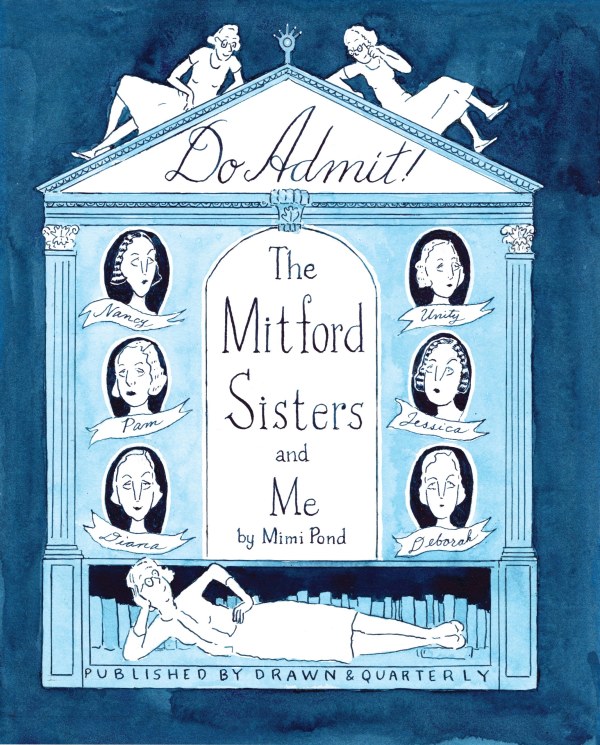 23. Do Admit: The Mitford Sisters and Me
Writer/Artist: Mimi Pond
Publisher: Drawn and Quarterly
Solicitation: Mimi Pond crafts a gorgeous, dazzling biography of the Mitford Sisters.
Born with pedigrees but without the pocketbooks to match, The Mitfords were certainly no strangers to lies, intrigue, or scandal. Nancy, Pamela, Diana, Unity, Jessica, and Deborah.
All six sisters were weaned on their family’s well-documented upper class eccentricities: a ne’er do well would-be entrepreneur father; a stern, stiff-upper-lipped mother; a revolving door of governesses of varying propriety, all against the backdrop of a crumbling estate falling into disrepair.
The sisters grew from cloistered turn-of-the-century country girls into debutantes who would marry into political influence—for better or worse. Is it any wonder that a young, working class Mimi in Southern California becomes enamored with The Mitfords’ downright fanciful rich-and-famous lifestyle? This charming, inventively cartooned, and lovingly researched biography captures the dramatic, over-the-top antics of high society’s strongest personalities as they rubbed elbows with some of history’s most infamous fascists and communists. Pond’s genius for classic cartooning in the vein of the Vanity Fair caricature and the satirical illustrations of Charles Addams brings the aesthetic decadence of the 1920s and ‘30s to life with effortless aplomb, warts and all.
Why it Made the List: Another comic that gives you a chance to learn about some fascinating history. Before this if you were to ask me about the The Mitford Sisters I would have thought they were some Folk Band from the 70’s. How wrong I would have been. The best way I could describe their lives is Forrest Gump by way of Downton Abbey.
So if you were like me and were ignorant to their existence know that they were a group of sisters who were born into the British upper class in the early 19th century. Each lived quite the life and their high status did not make them avoid family drama–quite the opposite as they were the definition of drama. The amount of scandals made The Kardashians look like the The Partridge Family. They were personally connected to so many massive figures of the day from John F. Kennedy to Adolf Hitler.
Their story by itself is fascinating enough and then you add some pure elegant storytelling of Mimi Pond. I have enjoyed a lot of her work before as Customer Is Always Wrong made a previous top 100. This thought was on another level. The page creation here was incredible. Pages would look like classic Style Magazine ads or Renaissance Paintings to resemble the Mitford Sisters life affairs. Pond’s ingenuity and execution made each page turn their own adventure.
To give this a personal touch Pond brought in her story as well to why she was telling this story. How learning about the Mitford Sisters was a vital time in her life and now she is able to come full circle and tell their tale.
 22. Partisan
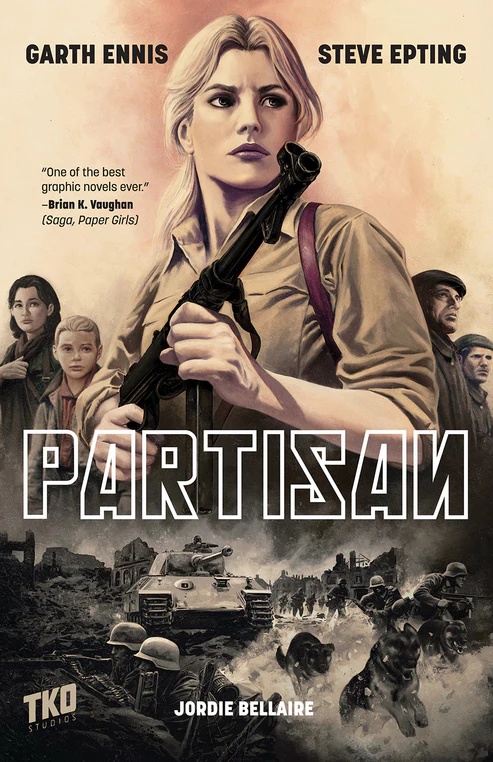 22. Partisan
Writer: Garth Ennis
Artist: Steve Epting
Publisher: TKO
Solicitation: “One of the best graphic novels ever.” – Brian K. Vaughan (SAGA, PAPER GIRLS)
Superstar creative team Garth Ennis (THE BOYS) and Steve Epting (Captain America: Winter Soldier) re-unite for a follow-up to their bestselling WWII graphic novel SARA.
Aleksandra, a blacksmith’s wife, is thirty when the German invasion comes. With her husband in the army, she and her son and daughter are left to fend for themselves. And when a brutal campaign of genocide begins, her only hope is to join the partisans.
Resistance fighters hated by the Nazis and distrusted by the local peasants, the partisans offer Aleksandra and her family a home- but only at a price. To protect her children from the horrors that surround them, this very ordinary peasant woman must learn to fight like a soldier- and to survive between the fronts of the bloodiest war in human history, no matter what the cost.
Why it Made the List: What I love about comics the most is the opportunity for surprise. Being able to pick up a book you know nothing about from creators you never heard of and following in love with it. When you walk into a comic book shop and see a book from creators you adore and you had no idea it was even coming out. That is exactly what happened to me when I walked into my shop and saw Partisan by Steve Epting and Garth Ennis on the shelf. As a huge fan of their previous WWII series Sara I was ecstatic to see them join forces once more.
It’s been so long since I saw new interiors or even a cover by Steve Epting, the simple existence of this already had me on its side. Of course he is probably best known for his work with Marvel on characters like Captain America. I would argue his style works even better for a story set in the real world. Epting’s character designs are very true to life. Unlike some artists that rely heavily on photo reference, Epting seems to favor subtlety and natural design to maintain realism. He also brings in the detail when it comes to backgrounds and character’s clothing. When you pair his style with one of today’s best colorists in Jordie Bellaire you have one fine looking book. The colors here are rightfully muted with a limited palette to represent the bitter cold of the Russian wilderness. Some of her best work comes during some scenes around campfires as the shimmering light brushes up against the warn faces. These soldiers and civilians clearly have been ravaged by war. It is also represented by the chilling shadowy wilderness that surrounds them. Escape is not an option.
The story centers on Aleksandra, the wife of a blacksmith, whose family gets caught in the midst of the conflict with the German Army. They flee from the only home they ever knew in hopes of survival. Quickly they find the war is all around them. The only hope is joining up with the Partisans as they fight back against the German forces in hopes of bringing an end to the conflict.
Although a fictional tale it comes from the true story it is based upon the Soviet Partisans who were members of resistance movements that fought a guerrilla war against Axis forces. A part of WWII history that is not as nearly covered as other conflicts. One that was vital in the war ending the way it did.
Military stories are where Garth Ennis shines the most as a writer and clearly the stories he wants to tell the most during this point of his career. This does not shy away from the utter brutality of war and the horrors it brought. What people had to do for the sake of survival words and images cannot fully describe. There are no heroes in this story. Simply individuals trying to make it out alive the best way they can. Aleksandra may not be a real person but captures the trials and tribulations civilians faced. How sometimes the only answer was to pick up a weapon yourself and fight back.
I am someone who is preprogrammed to like comics but for those who think Garth Ennis only pitches with one speed with books like The Boys know it is series like this that show his greatest strengths as a creator. When he’s backed up with top tier artistic talent you get one of the best books of the year.
 21. Cannon
 21. Cannon
Writer/Artist: Lee Lai
Publisher: Drawn and Quarterly
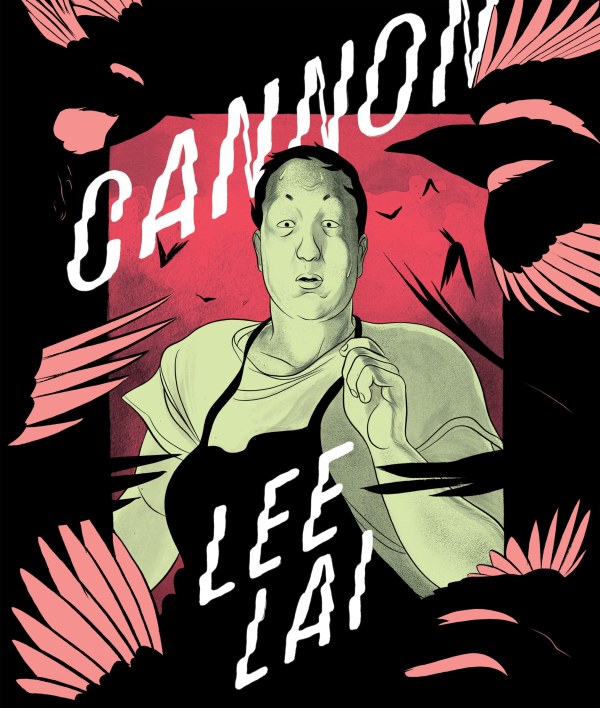
Solicitation: We arrive to wreckage—a restaurant smashed to rubble, with tables and chairs upended riotously. Under the swampy nighttime cover of a Montreal heat-wave, this is where we meet our protagonist, Cannon, dripping in little beads of regret sweat. She was supposed to be closing the restaurant for the night, but instead, well, she destroyed it. The mess feels a bit like a horror-scape—not unlike the horror films Cannon and her best friend, Trish, watch together. Cooking dinner and digging into deep cuts of Australian horror films on their scheduled weekly hangs has become the glue in their rote relationship. In high school, they were each other’s lifeline—two queer second-generation Chinese nerds trapped in the suburbs. Now, on the uncool side of their twenties, the essentialness of one another feels harder to pin down.
Yet, when our stoic and unbendingly well-behaved Cannon finds herself—very uncharacteristically—surrounded by smashed plates, it is Trish who shows up to pull her the hell outta there.
In Cannon, Lee Lai’s much anticipated follow-up to the critically-acclaimed and award-winning Stone Fruit, the full palette of a nervous breakdown is just a slice of what Lai has on offer. As Cannon’s shoulders bend under the weight of an aging Gung-gung and an avoidant mother, Lai’s sharp sense of humor and sensitive eye produce a story that will hit readers with a smash.
Why it Made the List: Not all narratives are about the story. Sometimes a comic can be intriguing for what it is not doing, or perhaps better put for what it is not forcing itself to do. Such is the case with Cannon by Lee Lai. Cannon is living in a world trying to figure things out. Your typical slice of life design that is at its strongest with the way it is able to capture the rising and falling tides of anxiety.
Anxiety is not the easiest thing to depict in a comic outside of being rather direct with it. Here we begin with the aftermath as we come upon the titular Cannon as she sits within a restaurant that has been ransacked as if the Perfect Storm was isolated to this one location. It’s wrath left tables toppled over, plates in pieces, and chairs broken. Quickly it is apparent this was not a freak accident but the work of Cannon herself for reasons not fully known quite yet.
It then pulls back to Cannon living her normal life and the stress it brings. Finding solace sharing time with her friend Trish, who is in the process of writing her next book. We get the complete picture Trish as well. Her lack of emotional availability when it comes to her relationships as well as how her reality fuels her fiction despite the problems that may cause. Cannon’s life is split working at the restaurant, taking care of her ailing grandfather, and watching horror movies with Trish as a necessary means of escape.
A sense of normalcy is established as well as the history of Trish and Cannon. We see how Cannon’s reliability can and is often used as a weapon against her. Gradually the weight of the world becomes heavier and heavier.
Lee Lai comes up with some creative and effective ways to showcase the rising stress in Cannon’s life. One of the most effective are during scenes within the kitchen as Lee is overwhelmed with orders and questions. Speech balloons fill the page but are cut off within the panel so you cannot fully read what is being said. We get to live those moments like Cannon. We know demands are being made but lack the comprehension to keep it all straight.
Lai uses other techniques as well to bring us into Cannon’s emotional state with continuous motifs horror esc imagery harkening back to those movie nights with Trish. Sharp red panels with familiar scenes, like the Climax of Carrier, flash in between everyday events. Demonstrating where Cannon’s head is actually at. Sound storytelling that prescribes to that old adage show don’t tell.
Lai uses thin lines that are light and backgrounds but specific with characters. She is able to create people that look like normal everyday individuals but also very distinct especially when it comes depicting emotion. She also sticks with the four panel grid keeping a natural rhythm until it finally breaks as Cannon’s control is finally lost.
Cannon works to create real people with challenges that you can understand and gradually brings you in to feel what they are feeling. If you are looking for a story about what reality is actually like and the ways we work through it this is a read to check out.
 20. Fantastic Four
 20. Fantastic Four
 Writer: Ryan North
Artist: Humberto Ramos, Cory Smith, Creees Lee
Publisher: Marvel
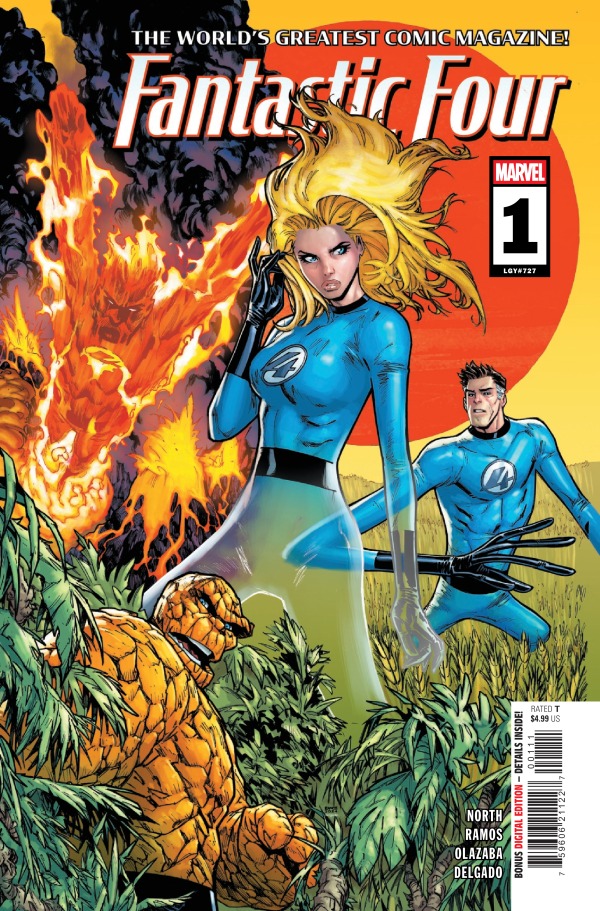
Solicitation: Out of the shocking events of ONE WORLD UNDER DOOM comes a new FANTASTIC FOUR volume filled with their adventures through time, space, science and the human condition! Courtesy of their world-conquering enemy, the FF are scattered through four different eras in Earth’s history! Alone and isolated in wildly different time periods, Reed, Johnny, Ben and Sue all must fight to survive. Their only hope is to reach the Forever Stone: a mass of dense granite that happens to be one of the longest-lasting rocks on the planet! Do you want to see Ben Grimm fight a dinosaur, as drawn by Humberto Ramos? Of course you do!
Why it Made the List: This was a big year for The Fantastic Four with the MCU movie finally coming out. Opinions on that notwithstanding it met the Marvel comics went all in when it comic the the First Family. The thing is though Ryan North’s run on the Fantastic Four has long been Marvel’s best book. So I do not know why they have not being doing that long ago.
Two things majorly define this run in my opinion. The first is how it is able to get around the trend of having to write for the trade with a number of single issue stories. North will introduce some intricate Science Fiction concept that others would take six issues on and tells a story within one. The second thing is how this run has found new ways to approach these classic character. Not just in ways they use their powers but also finding ways to group these characters into pairings we rarely see. For example we have seen Alicia and Reed explore their friendship. I cannot think of many times they have even had a conversation that was not just about Ben.
My one issue with this run has been that the art could be inconsistent at times. From changing to issue to issue, and sometimes it simply was not the highest of standard. The best thing about the relaunch (that really wasn’t needed) is that it brought with it Humberto Ramos onto art duties. I know his style is not for everyone but I love it and what he has brought to this title.
Marvel right now is in a major creative rut. Despite that there have been some bright spot and this has easily been the top spot. Considering Ryan North’s name is popping up in a lot more locations including DC comics not sure how much life this run has left. For now I am just going to enjoy it and hope the end is not too soon.
 19. Life Drawing
 19. Life Drawing
Writer/Artist: Jaime Hernandez
Publisher: Fantagraphics Books
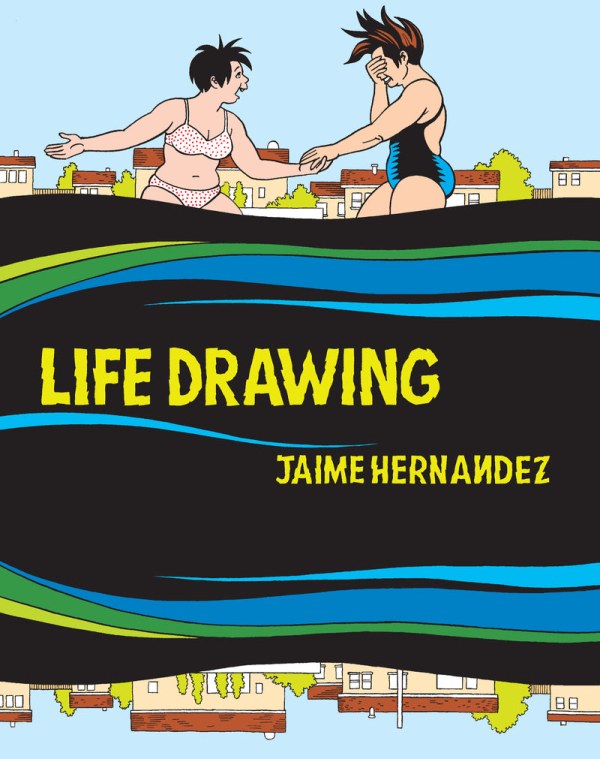
Solicitation: Ten years in the making (and torn from the pages of the legendary Love and Rockets), Jaime Hernandez’s newest graphic novel skillfully weaves two generations of his beloved characters into a satisfying story of love—both young and middle-aged. Life Drawing darts primarily between the youthful Tonta and the venerable Maggie. Tonta has a crush on her art teacher, Ray, as well as an axe to grind with an older woman in the neighborhood. When Tonta finds that the woman, Maggie, is married to Ray, things get complicated. And Tonta does not handle complications well.
Life Drawing showcases Hernandez’s brilliant talent for character, weaving relationships, rejections, infidelities, and adventures involving: Tonta’s self-involved sisters Vivian, Violet, and Muñeca; her colorful pals Gomez, Judy Fair, and Brown Alice; her mother, the infamous ‘Black Widow of the Valley’; and of course, the two great loves of Maggie’s life, Ray and Hopey. There’s also a forest spirit, two weddings, some cosplay, a little pole dancing, and page after page of breathtaking comics by the medium’s most wide-eyed romantic. Did we mention the weddings?
Why it Made the List: Love and Rockets is one of those series that has long been on my list of shame. I rectified that a bit this year but still was worried to pick up Life Drawing to see if it would click with me. Glad I made that choice because it was a great way tip my toe into that well.
This takes two of Jaime Hernandez characters and brings them together into one connected tale. You have Tonta who is the girl who can’t find a home moving from sister to sister because living with her mom is out of the question. Then Maggie who is you middle aged woman who is living through life and becomes a target of Tonta’s aggression due to her jealousy. After a series of events both gain an unexpected sudo friendship.
No idea why it took me so long to catch up with these books because this hits squarely into my sensibilities. Stories about people living their lives in a heightened state of reality and the insanity that goes with that. Of course Jaime Hernandez’s cartooning is legendary and that remains true in any era. So if you were like me and haven’t got into his past work or the work of his brother this operates as a great introduction.
 18. 30 Seconds from Gaza
 18. 30 Seconds from Gaza
Writer/Artist: Mohammad Sabaaneh
Publisher: Interlink Book
Solicitation: A powerful graphic novel from an acclaimed Palestinian political cartoonist that archives often-censored digital footage of the realities in Gaza into enduring works of art.
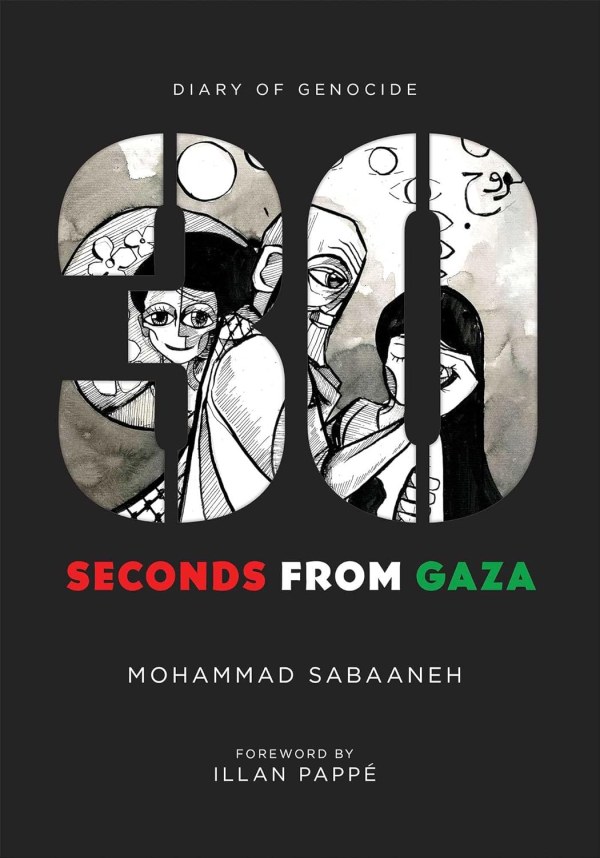
Mohammad Sabaaneh, a Palestinian artist based in the West Bank, bears witness to genocide in 30 Seconds from Gaza—a graphic reflection that captures the horror of experiencing mass atrocity through 30-second video snippets sent to his phone in real time after October 7th, 2025. Through his stark black, white, and gray linocut cartoons, Sabaaneh transforms fleeting, often-censored digital footage into enduring works of art.
Internationally acclaimed for his bold political commentary, Sabaaneh documents the brutal realities of life under Israeli occupation. His powerful illustrations confront the atrocities in Gaza and the West Bank, exposing the violence of apartheid and settler colonialism while honoring the unwavering resilience of the Palestinian people.
After being shadow-banned on social media, and losing 15 years of content due to censorship, Sabaaneh began drawing from the very footage most at risk of being deleted. Each image in this book is an act of defiance—an effort to preserve a visual history that corporations and occupiers seek to erase.
Why it Made the List: If there is one comic I would recommend anyone to read this year it would be 30 Seconds from Gaza by Mohammad Sabaaneh. As a comic it breaks from convention as you will not find pages filled with sequential art, panels, nor a continuous narrative from one page to a next.
What Sabaaneh did was take images and scenes from Gaza he observed on social media and constructed an interpretation of those events. Opening with a sensitive content warning he looks to bring light and attention to the atrocities that are occurring. Along with the endless suffering that is still taking place.
Sabaaneh decisively decided to use India ink when constructing these images and that accomplishes a number of things. For one it represents the permanence of what is occurring. Showing the purpose of his art to ensure these are not images that can be easily removed, washed, away, or taken down for community guidelines violations. Because it is vital the world sees what is happening.
Sabaaneh style is sharp, abstract at times, but always powerful. You see the anger, you see the torment, and the endless devastation. Each image brings with it corresponding text to provide an element of context to what you are seeing. Even without it the point is clear. Pages exist with a single image surrounded by darkness to help represent the utter isolation of what is happening and hopelessness that comes with each passing day.
Simply put art exists for a purpose like this. One that goes beyond awards, goes beyond telling stories, and acts as a form of rebellion against the worst of what humanity has to offer. Mohammad Sabaaneh reminds us we cannot ignore what is happening is Gaza because we are all so close to what is happening–simply a click or page turn away.
 17. Ginseng Roots
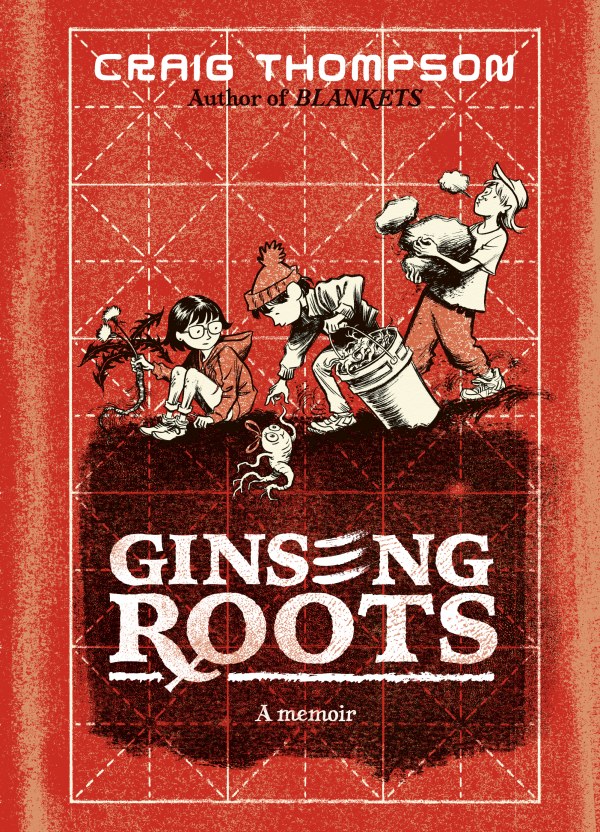 17. Ginseng Roots
Writer/Artist: Craig Thompson
Publisher: Pantheon
Solicitation: From the celebrated author of Blankets and Habibi comes a new graphic memoir exploring the class divide, childhood labor, family, and our globalized world—all centered on Wisconsin’s ginseng farming industry
“Ginseng Roots is Thompson’s most visually arresting work so far.” —New York Times Book Review
“A sweeping story, gorgeously drawn and beautifully told — this is Craig Thompson’s masterpiece.” —Joe Sacco, author of Palestine and Paying the Land
When Blankets first published in 2003, Craig Thompson’s seminal memoir about first love and faith lost in rural Wisconsin debuted to rapturous acclaim. The winner of two Eisner and three Harvey Awards, it is to this day considered one of the all-time great works of graphic storytelling. Now, in Craig’s long-awaited return to the autobiographical form, comes the story that Blankets left out.
Ginseng Roots follows Craig and his siblings, who spent the summers of their youth weeding and harvesting rows of coveted American ginseng on rural Wisconsin farms for one dollar an hour. In his trademark breathtaking pen-and-ink work, Craig interweaves this lost youth with the 300-year-old history of the global ginseng trade and the many lives it has tied together—from ginseng hunters in ancient China, to industrial farmers and migrant harvesters in the American Midwest, to his own family still grappling with the aftershocks of the bitter past.
Stretching from Marathon, Wisconsin, to Northeast China, Ginseng Roots charts the rise of industrial agriculture, the decline of American labor, and the search for a sense of home in a rapidly changing world.
Why it Made the List: Craig Thompson’s Blankets is one of my all time favorite comics. The downside to that is when reading any of his new material that brings with it a certain level of expectations. Thompson is clearly aware of that phenomenon so for his latest work he is going back to his roots–literally.
Ginseng Roots functions with two major parts. The first being Thompson examining his own life including his past specifically growing up working on Ginseng farms in Wisconsin. How that helped shape who he is today. The second part is a deep dive into the history of Ginseng and how Wisconsin became the Ginseng capital of the world, but also the major role Ginseng has played throughout human history. Never knew a root could be so important.
It works as an apt metaphor as Ginseng is greatly impacted by the area and which it grows perhaps more than any other plant. Despite being the same plant the color, texture, and taste will vary differently based upon the soil it is grown. Fitting for a memoir on how one’s upbringing informs who they are as a person.
Thompson is an open book with this work showing how much his fame within the comic book world has weaned over the years. How the impact it has had on his self worth. Also how Blankets has impacted his relationship with his family, including his sister that he did not include within that story. This is a comic that is as much about its own creation as it is the past events it is covering. As he gets into his health challenges I wondered how this book even exists at this point.
That emotional honesty along with Craig Thompson continued strengths as a cartoonist allowed this to enter a similar emotional realm as Thompson’s best work. Although this may be the most layered work he has done to this point.
 16. Absolute Wonder Woman
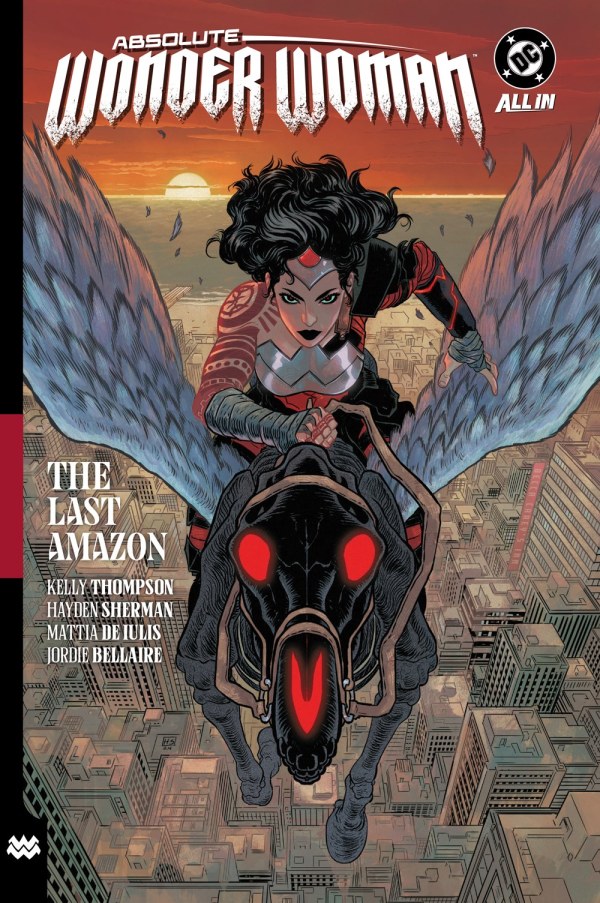 16. Absolute Wonder Woman
Writer: Kelly Thompson
Artist: Hayden Sherman, Dustin Nguyen
Publisher: DC
Solicitation: Without the island paradise, without the sisterhood that shaped her, without a mission of peace… she’s still the Absolute Amazon!
Spiraling out of the catastrophic events of Absolute Power, a new side of the DC Universe is born — the Absolute Universe! In a different, darker world, Diana of Themyscira was not raised in paradise, but instead was exiled to the underworld as a baby and raised by an enemy. Darkness and exile did not destroy her; instead, they made her all the stronger — honed into an even greater weapon by tragedy, danger, and magic. Long denied her Amazonian heritage, Diana has finally reached the time for her to rejoin the surface world. Armed with new weapons forged in Hell, and a mission that looks a bit more like justice than peace, Diana will not be stopped on her quest to save the world and discover her place in it, even if that means carving it herself!
Eisner Award-winning writer Kelly Thompson is joined by breakout superstar artist Hayden Sherman to reinvent Wonder Woman from the ground up!
Why it Made the List: Way back when I went over Absolute Batman I mentioned how one of my challenges with that series is that I still feel like the character of Bruce Wayne remains a mystery beyond his service level foundation. The opposite can be said regarding Wonder Woman as so much time has been spent focusing on who she is as a person and character.
There are a lot of misconceptions when it comes to the Absolute Universe as people see Wonder Woman with a giant sword and think this is trying to relive the Extreme days of the 1990’s all over again. Trying to be dark and twisted to make something that is “more adult”. In reality this has been a series powered by empathy. A story that tells the tale of a mother and child trying to find love in the worst conditions one can imagine. It is more adult because it is able to explore emotion on a level that is not just one speed.
DC has also made a point to fill the Absolute books with great artists and Hayden Sherman is for me the artists of 2025. I have been a fan of their work since reading the series Wasted Space. I amazed how much Sherman has grown as an artist. They always had a sense of inventive page layouts. Now that is paired with character work this is sharp but still outside the norm of the DC house style. Love living in a comic book world where a book like this can be so successful despite being outside the norm for DC superhero expectations.
 15. Smoke Gets in Your Eyes
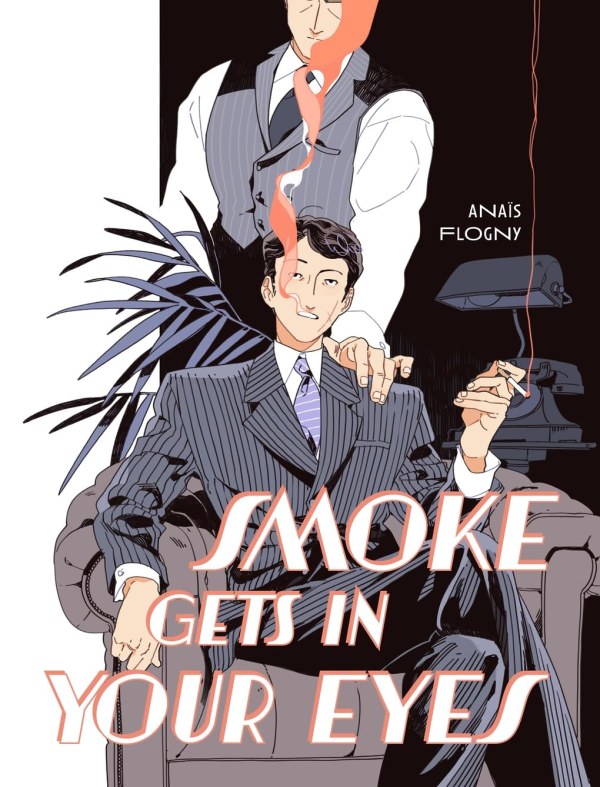 15. Smoke Gets in Your Eyes
Writer/Artist: Anaïs Flogny
Publisher: Abrams Books
Solicitation: A gripping and lushly illustrated tale of love and lies set between 1930s Chicago and New York’s criminal underworld, perfect for fans of manga like Banana Fish and readers of graphic novels like Laura Dean Keeps Breaking Up With Me who are looking for adult LGBTQIA+ fiction.
Chicago, 1930. Jules Tivoli is a penniless Italian immigrant doing odd jobs to make ends meet. A twist of fate causes him to cross paths with Adam, a kingpin in Chicago’s criminal underworld who sees something in Jules that nobody else does—something special.
Under Adam’s wing, Jules becomes somebody and falls in love hard with the man who made him. But after an FBI crackdown, Adam and Jules must flee to New York to escape being caught in the ensuing chaos.
In New York, Jules’s Italian heritage gains him access, recognition, and power in the Cosa Nostra crime family. As he becomes more important in a city where Adam can’t seem to catch a break, he meets Eufrasio—his handsome, violent, and ambitious new partner who insists that Adam is holding Jules back. But Jules would be nothing without Adam—wouldn’t he?
Torn between his past and his future, a sudden betrayal forces Jules to find a way to protect his love and prove his loyalty—if he can even manage to make it out alive.
Why it Made the List: The crime and noir genre is my personal favorite, but even I know that those stories can often rely on a very specific list of tropes and story types. Occasionally you’ll run into something that finds a way to break free while staying true with what works with the genre. That is the case with Anais Flogny’s graphic Novel Smoke Gets Into You Eyes.
The story follows Jules Tivoli living in Chicago in the 1930’s with no money or power to his name, instead spends his time cleaning the floors of a local shop. While there though he sees the power the local crime family has over the area. He sees Adam, the local kingpin shakedown merchants for protection money. Most would be appalled by those actions. Jules is enticed by it. Eventually gaining favor with Adam and joining his forces. Adam sees something in Jules, perhaps due to his moxy or perhaps due to Jule’s Italian heritage that will gain favor with the local New York mobs in ways Adam’s heritage excludes him. There’s something else as well. A connection of passion that they both share an act upon despite the danger involved. Does Adam truly care for Jules or is he simply a golden ticket to a grander life? It’s something Jules will pay a major price to learn.
This could have easily fell into the trap of being a sappy romance that read like what would happen if the Hallmark channel took on Goodfellas. Luckily the drama here is written with care. Adam and Jules are both captivating characters within their own right. They live within a world where landmines are placed all around them. Of course if their relationship were to be found out it would not be good for either of them. That’s just one issue to deal with when you are in a world of criminals, thieves, and murders. Conflict is aplenty which keeps the story moving.
This is Anais Flogny’s debut graphic novel which I also find quite impressive. Her style is a blending of worlds of different influences. Being a Parisian artist you certainly see a European flair, but there’s elements of Manga styles especially with her expressive faces. All lend to a timeless design ideal for a story set in 1930’s America.
This is a story full of love and passion. Both are on display with tender looks and side glances that build an affair of the mind to a full on physical attraction. But that passion is also preceded and followed by acts violence that are brutal in their depiction. Life and death stakes become very clear very quickly.
Smoke Gets in Your Eyes succeeds because it takes a story that on its face has been seen before but gives an entirely new perspective both with the creator telling it and the characters living it. When you combined that with sound fundamental storytelling and some quality art you get a book worthy of attention.
14. Beneath the Trees Where Nobody Sees: Rite of Spring
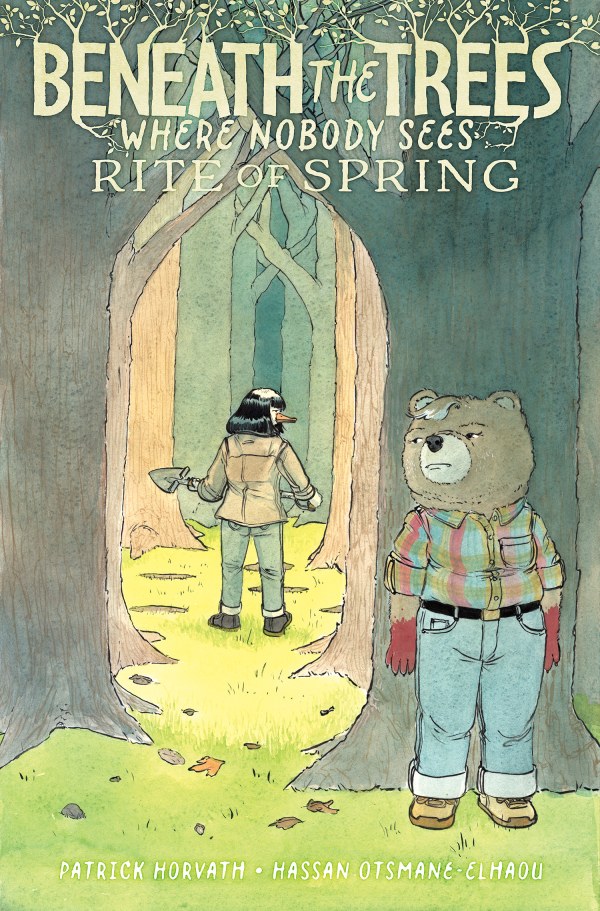 14. Beneath the Trees Where Nobody Sees: Rite of Spring
Writer/Artist: Patrick Horvath
Publisher: IDW
Solicitation: It’s been eight long years since a bloodlusting brown bear drove into the city, kidnapped a kind young duck, dissected his body, and buried the pieces in the woods. The duck’s family painstakingly sought justice… but this brown bear was smart… she covered her tracks… and in the ’80s, there simply wasn’t a way for the duck’s family to find answers.
But it’s not the ’80s anymore. Almost a decade after cuddly brown bear Samantha Strong solidified herself as the sole serial killer in Woodbrook, the world is entering a new era. As Samantha will soon find out, there are no secrets in the age of the internet. And those who lost loved ones to her massacre haven’t given up the flame of justice.
A reckoning is coming to Woodbrook. Join visionary writer and artist Patrick Horvath as he returns to the hit series that has taken the comic world by storm!
Why it Made the List: There are few things that are harder to achieve than following up on a surprise success. It’s like having your first at plate appearance in Major League Baseball be a Walk Off Grand Slam. The next time you are up people are going to expect a lot. Patrick Horvath had a huge commercial and critical hit with Beneath the Trees Where Nobody Sees, and I was curious how he would follow up such a unique title.
The answer was staying true to what got him there. Beneath the Trees Where Nobody Sees: Rite of Spring keeps everything that made the first series work and just adds slightly to it. You have this book that is basically Dexter by the way of Richard Scarry’s Busy Town. With chapter two a few new elements are added to keep the idea fresh.
Now we get part of the story through the eyes of a victim’s family plus how the onset of the internet changes the way Samantha Strong approaches her way of life. Small but significant changes that add a new level of stakes.
Plus Patrick Horvath’s art remains so great. The juxtaposition of bright and cheerful animals with brutal body horror just works. Nothing else on the stands looks like this and nothing else can.
 13. Criminal: The Knives
 13. Criminal: The Knives
Writer: Ed Brubaker
Artist: Sean Phillips
Publisher: Image
Solicitation: A sprawling Criminal epic, The Knives is the most ambitious tale Brubaker and Phillips have ever tackled. Three dark journeys wind around each other over a decade, like sharks hunting for a kill.
Cartoonist Jacob Kurtz goes to Hollywood in the era of peak TV to work on an adaptation of his comic strip, only to find himself caught up in the life of his aging aunt and the vultures circling her estate. Angie was raised at the Undertow, but now everything she loves has been taken from her. She’s on the streets with vengeance on her mind, her eyes set on the city’s kingpin. And finally, Tracy Lawless is home from the Special Forces, finally a civilian again, but he’s in bad shape and this city has always brought out the worst in him.
These three tales collide in The Knives a breathtaking noir story about greed, ambition, heartbreak, and blood ties. A must-have for all Brubaker and Phillips fans!
Why it Made the List: Ed Brubaker and Sean Phillips are my all time favorite creative team. Their storytelling styles and subject matter fit my sensibilities so when they team up there’s always reason to celebrate. Even more so now that they are returning to perhaps their greatest title Criminal with the upcoming Amazon series ready to debut.
If you were perhaps concerned Brubaker and Philips had gone Hollywood due to the upcoming TV series they met you at those concerns. The central story focuses on a Jacob Kurtz a cartoonist who has gotten his big break as he is working on the TV adaptation of his long running series, but soon fines out the harsh reality of working in Hollywood.
And that is only one of the stories as there also weaves into a story about an inspiring cat burglar who gets in over her head, as as well as a former member of the special forces who may have finally found the civilian calling he was hoping for.
Brubaker and Phillips are students of the game and know all the techniques needed in taking what could easily be an overtly confusing and convoluted story but laying it out in a way where everything is clear and connected. It is like putting together a puzzle that is face downs so you do not know exactly where everything belongs. When everything finally clicks into place the picture becomes clear.
They wear their influences on their sleeves making jokes about being Kafkaesque and having a character named Jacob Kurtz which is a clear reference to Jack Kirby’s real name of Jacob Kurtzberg. It’s as close as you can get to breaking the fourth wall without directly speaking to the audience.
Phillips is one of my all time favorite artists, not because he has a style that yearns to be taken from the page to a T-Shirt so you can reveal in how cool it looks. Rather, he is like a point guard who distributes the ball exactly where it is needed. It is all about the fundamentals. People look like people, places look like places to the point you can forget you are reading a comic book and not looking at actual real life. Credit should also go to colorist Jacob Phillips who has proven to be a great artist himself but also is able to match those lines with palette that is pitch perfect to the world of Criminal.
If you have never read any of Criminal you should have no issues jumping into this as the everything here are all self contained. There are connections to previous storylines and characters in the Criminal universe. This fills in some blanks to some previously established characters giving a little extra enjoyment to those seasoned Criminal readers.
Bottomline is The Knives: A Criminal Book is everything I love about what Ed Brubaker and Sean Phillips do as creators. Pulp Drama at is peak that knows the tropes of the genre so well it can enhance when needed or work away for the extra special surprise.
 12. Hirayasumi
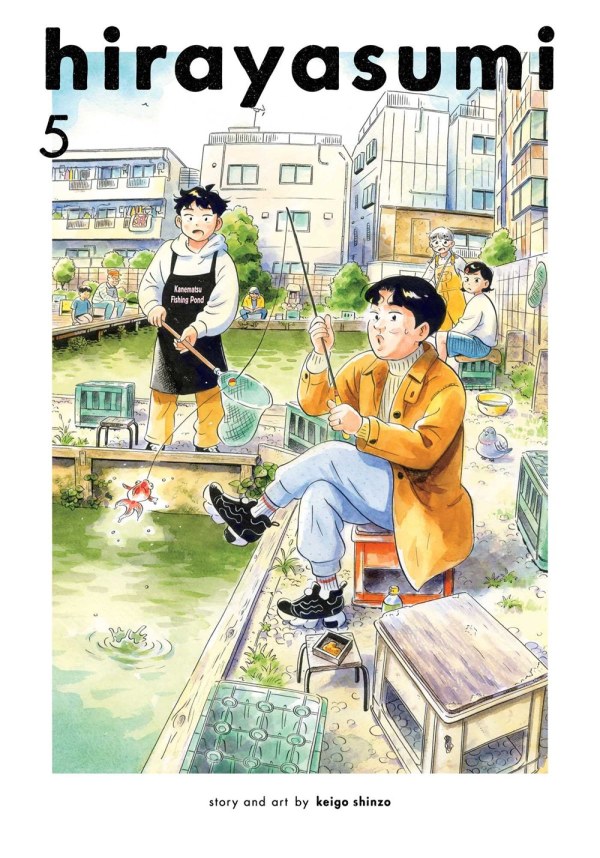 12. Hirayasumi
 Writer/Artist: Keigo Shinzo
Publisher: VIZ Media
Solicitation: At 29 years old, carefree Hiroto Ikuta doesn’t have a girlfriend, a full-time job, or a plan for the future—and he couldn’t be happier. Hiroto’s breezy attitude isn’t easy for everyone to understand, though. In a world filled with anxiety, confusion, and grief, Hiroto and the people who surround him are all just doing their best to figure out this thing called life.
Christmas is right around the corner, but when Natsumi ends up hosting a holiday party, she runs into a bit more trouble than she bargained for! Meanwhile, Hiroto and Yomogi can’t seem to stop running into each other. As the lives of this laid-back part-timer and serious realtor continue to collide, they may just find themselves becoming less and less set in their ways.
Why it Made the List: Let me start by staying this was the Manga series I have been waiting for. With that being said I may rank it much higher than most. One reason I was so late getting into Manga was because I had enough of stories that focused on super heroes or the supernatural. If I was going to read something else I wanted to read a story about people living normal lives. That’s exactly what Hirayasumi is about.
This isn’t a melodrama or a soap opera in manga form. The issues characters face are true to life like balancing work and social life, trying to find structure in your home, and lastly the dynamics of family living together at an older age. At its center is an endearing relationship between Hiroto and his elderly neighbor that recently passed away. Through flash backs we have gotten to see them form an unlikely friendship. It’s sweet, never gets too big, and has a cavalcade of characters worthy of investment. The best type of drama in my opinion.
Others may be bored to tears, for me I am so invested in seeing where life takes all these different characters.
 11. Cornelius: The Merry Life of a Wretched Dog
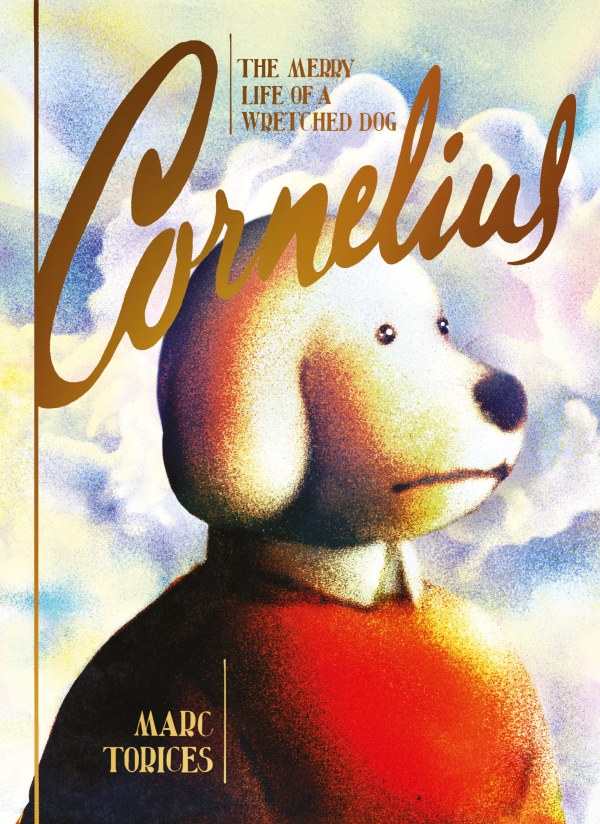 11. Cornelius: The Merry Life of a Wretched Dog
Writer/Artist: Marc Torices
Translator: Andrea Rosenberg
Publisher: Drawn and Quarterly
Solicitation: Horrifying and hilarious, Cornelius the dog is a spectacular trainwreck—you just can’t look away.
Cornelius is a fumbling loser, the butt of everyone’s jokes. When his friend Alspacka is kidnapped, the subsequent criminal investigation turns into a dramatic and emotional ordeal, upending Cornelius’s life. Torn between his desire to be a writer and his immense guilt over his cowardly role in Alspacka’s abduction, Cornelius is a classic Faustian figure: an aspiring artist so hungry for success that he will pay any price.
Rarely does a book so delightfully defy categorization. Cornelius is an experience: a farcical collage that reads like a drug-fueled fever dream, an intense emotional pendulum oscillating between psychological horror and slapstick comedy—a real roller coaster. And truthfully, Cornelius is all this and more: a brand, a phenomenon, a way of life. From the singular mind of Marc Torices comes a surreal, carefully curated universe, complete with its own icons, mythology, and metanarratives.
Exquisitely drawn, Cornelius’s kaleidoscope of styles pays homage to the comics medium, an unabashed love letter to the form itself. Translated from the Spanish by Eisner Award-winner Andrea Rosenberg, Marc Torices’s critically acclaimed and award-winning Cornelius is mesmerizing in its originality
Why it Made the List: Cornelius is a very good boy. In celebration of his 300th birthday of being a fictional character comic creator Marc Torices has put together a collection of works throughout history that celebrate a character that has had a dominated presence in movies, television, ice rink events, and even a burger chain. This is the first of a thirty volume project that collects newspaper strips, previous comics and bootleg creation of one of the world’s most famous dogs. The best part about all of that? It’s entirely made up.
To clarify it is all made up by Marc Torices and even the most dedicated Professional Wrestler would could be impressed with how well he lives this gimmick. Including some impressively detailed notes section that is a book within itself.
So then the question is of course why do this? Why construct this elaborate fake history of a cartoon dog and create a comic book out of it? Going through this there’s a lot of answers to that question but one of the biggest gets to the act of creation itself. How a piece of art crafted by an individual can grow in so many directions. Art has ways of gaining a life of its own beyond the initial intent and purpose. We see the good and the bad that comes with that and how faceless success can be.
On a sheer artistic level this is an impressive feat. This is meant to look like a multitude of different artists from across eras and parts of the world. Tt very much comes off that way to the point I had to research to see if there was truth to the story being told regarding this comics history. Torices shows so much versatility both in his style and design. You do feel like you are reading a newspaper strip of a European from the 1970s as well as an indie book akin to a Charles Burns graphic novel. Torices gave himself quite the assignment here and to his credit achieve it in the highest order.
Cornelius’s story is more than just a symbolic tale. The story within the story is compelling in its own right getting this collection of short comics that are able to standup on their own accord. What really separates this is how it represents the history of comics, specifically character creation. Comics are famous for people creating iconic characters and being left beyond. You have Joe Shuster and Jerry Siegel with Superman or even something more recent like Matt Furie’s Pepe the Frog being co-opted by hate groups to represent something it was never designed to be. This comic speaks to it all.
 10. Spectrum
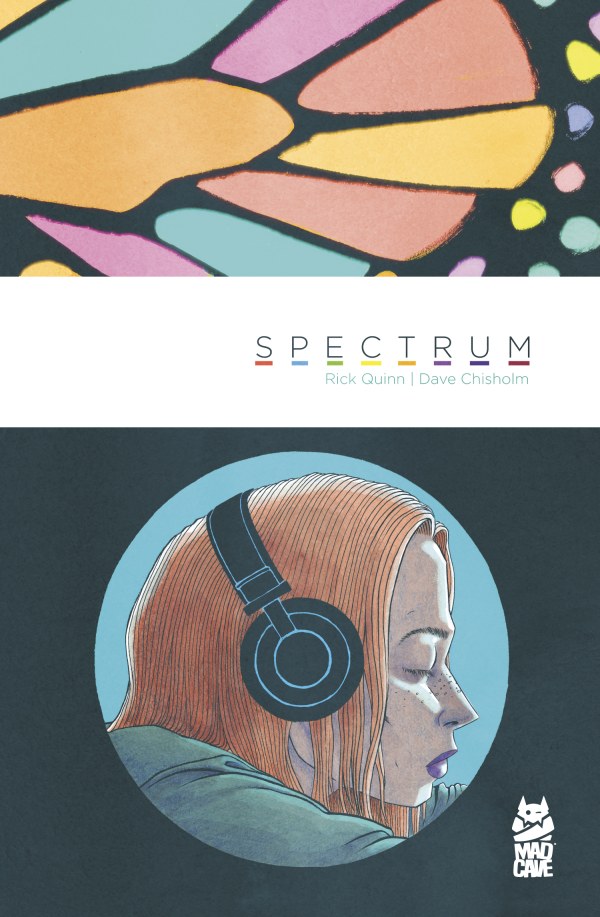 10. Spectrum
 Writer: Rick Quinn
Artist: Dave Chisholm
Publisher: Mad Cave
Solicitation: Melody Parker is losing her mind. She’s living on the streets of Seattle during the WTO protests of 1999. She is seeing things. Androids. Aliens. Pigs in high fashion. And a creature named Echo — one of the Sustained: elemental beings with the power to alter reality through music. She invites Melody to join her as she brings about the end of the world. As Melody tries to escape this strange woman, suppressed memories from across vast spans of time flood into her awareness, bringing her very identity into question. You don’t want to miss this stunning new release from writer Rick Quinn and music-comic-specialist Dave Chisholm (Miles Davis & the Search for the Sound).
Why it Made the List: This is exactly what the comic industry needs. For those that feel comics can often be filled with more of the same I present to you a book like Spectrum that is unlike anything I read before in recent memory. An issue where the passion is palpable because it is what is driving its creation in the first place.
The story focuses on the character of Melody Parker who is a bit of an unwritten script. She has little memory of who she is including the origin of a tattoo on her arm. Her life is on the streets until she runs into a mysterious figure named Echo who wants Melody to join her in her crusade to end the world.
In Melody’s attempt to escape, she begins to have flashes to influential musicians through history reliving their tales. But what does it mean and is it a clue to who she really is?
Quickly it is apparent that both writer Rick Quinn and artist Dave Chisholm have a love for music and the power of art in general. There is so much purpose within the craft of this series from the script-like lettering to the distinct color pallets that give each era we visit a different look and feel.
Often there is a distinct texture to the designs of the page as if you can reach out and be apart of these worlds. Music is represented is so many creative ways as if you stare at it long enough the notes will begin to audibly play.
Now the narrative here is represented in a way where it’s not always clear what you are looking at and what exactly is happening. The type of mystery that does push your mind to forgo convention in order to flow in the rhythm of the story. A type of sympathy for the soul that will educate as well as move you. For some it may be asking too much, but if it hits the right chord with you its quite the special experience.
 9. Raised By Ghosts
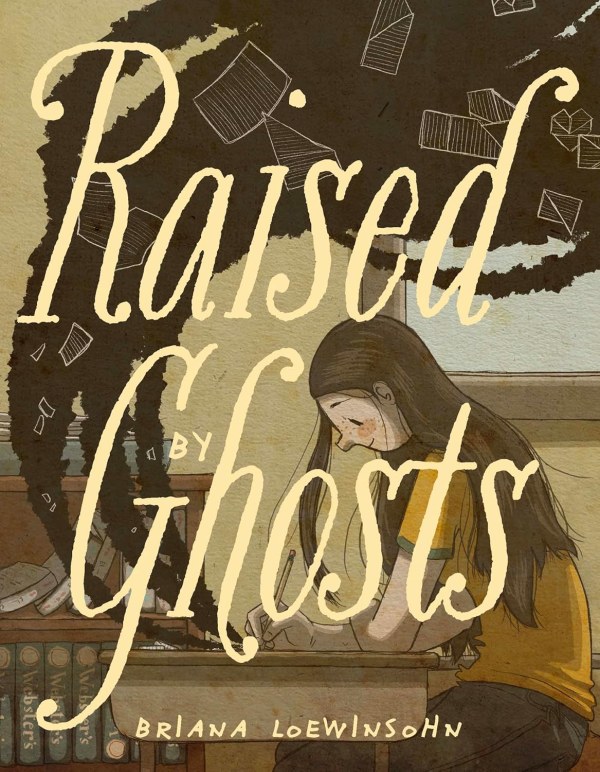 9. Raised By Ghosts
Writer/Artist: Briana Loewinsohn
Publisher: Fantagraphics
Solicitation: Set in the author’s own teenage years, Raised By Ghosts begins in 1991 with semi-autobiographical Briana in middle school. Classes are a bummer, but lunches are worse; either spent alone, or being teased. Traditionally a good student, Briana is not doing well in her academics, but keeps it a secret. Her parents (divorced) are a mess, and largely absent. She spends a lot of time by herself. By high school, she makes friends, and those connections are her only source of happiness as they help each other navigate adolescence. But life at home with each parent remains fraught. When her relationships at school begin to falter, she has no one to turn to, forcing Briana to grapple with her sense of self-worth, her longing for belonging, and her desire for authenticity in her relationships.
Raised By Ghosts is a powerful, affecting graphic novel for young adult readers. The story is told by shifting between Briana’s first-person class notes and diary entries. In her understated yet masterful approach to comics storytelling, Loewinsohn eschews dramatic confrontations and overt sentimentality, preferring instead to underscore the idea that sometimes acceptance and love can be communicated through quiet, everyday moments and close family bonds
Why it Made the List: Despite its title it’s not a tale about a girl with apparitions as parents that learns love through supernatural methods. Rather it’s memoir about the isolation of adolescence and growing up with parents who were not physically there most of the time.
Despite the physical absence it is not a story void of emotional love as Briana’s would be left notes from her parents that would express their care for her despite how separated they often were.
Taking place during the 90’s communicating through notes was an active way of life and that is depicted through this story. Using a comic prose approach with pages dedicated to ripped up papers telling the story as if Briana was grabbing whatever she could at the time to jot down important details before they were forgotten.
Raised by Ghosts is a story based in reality not one trying to directly reflect what life was. Despite that it has an authenticity stories of this ilk often fail to capture. That’s because it is not focused on reminiscing about pop culture from yesteryear but what it was like to live in this era. Having late evening conversations with phone attached to your ear in an attempt to gather all the key details about the coming and goings of the people in your world.
Loewinsohn’s cartooning is key to capturing this specific tone. Her characters have warmth and so much life, but this somberness that is ever present. The color palette is soft with a muted brightness and plenty of brown, greys, and tans to fill up this world. Its like the warmth of your favorite hoodie on a biting autumn evening. There is this constant balance at work that makes it so appealing.
This isn’t a memoir of someone who lived some remarkable life but rather a typical adolescent seeking guidance and connection and its in the mundanity it finds its charm.
 8. Batman and Robin: Year One
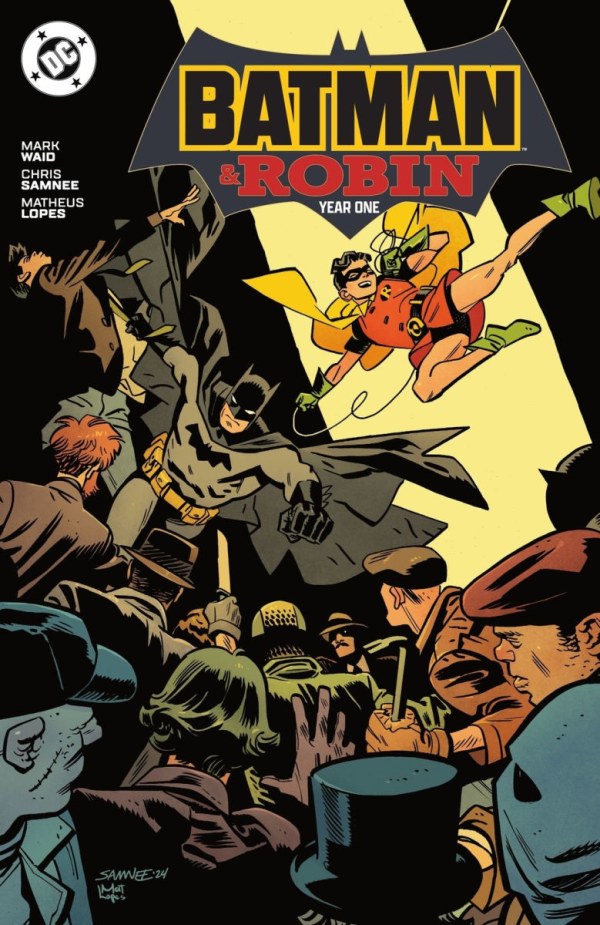 8. Batman and Robin: Year One
Writer: Mark Waid, Chris Samnee
Artist: Chris Samnee
Publisher: DC
Solicitation: The early years of Batman and Robin were anything but smooth sailing. Join fan-favorite creative duo Mark Waid and Chris Samnee as they explore the first year of Bruce Wayne and Dick Grayson’s partnership, both as a newly minted father and son in the eyes of the public and as the crime-fighting Batman and Robin to the criminal underworld of Gotham City! Dick may be capable and enthusiastic, but does he have what it takes to stand up against the deadliest costumed villains the city has to offer? And Batman may be prepared for anything — but is he prepared to be responsible for the life and safety of a teenage sidekick?
Why it Made the List: The Year One moniker in DC holds with it a great deal of weight. There have been plenty of books to utilize this concept and when you look at them as a whole most have gives us some of the best stories of those specific characters. So when you are telling the Year One story of Batman and Robin you need some of the best talent. DC did just that with Mark Waid and Chriss Samnee.
As a creative team they have given us some of the greatest super hero comics of this era and I am hard pressed to say this is their best work yet. Samnee’s storytelling is just on another level right now compared to any other artist in the superhero realm. The guy just understands the cinematic language of the medium from choosing the most impactful angle to making the page turn an intense exercise.
For a storyline that covers a time and place that is well worn they are still able to manifest some surprises along the way. The heart of this story though is the relationship between Dick and Bruce. Specifically the way in which they change one another. They fight, bicker, and question one another on a minute by minute basis. Through that though they find deeper ways to connect as they learn more of each other’s world.
It’s a timeless tale existing in a multitude of eras with 1930s-40s Art Deco noir designs and modern technology. A type of story that will only get better with age.
 7. Salt Green Death
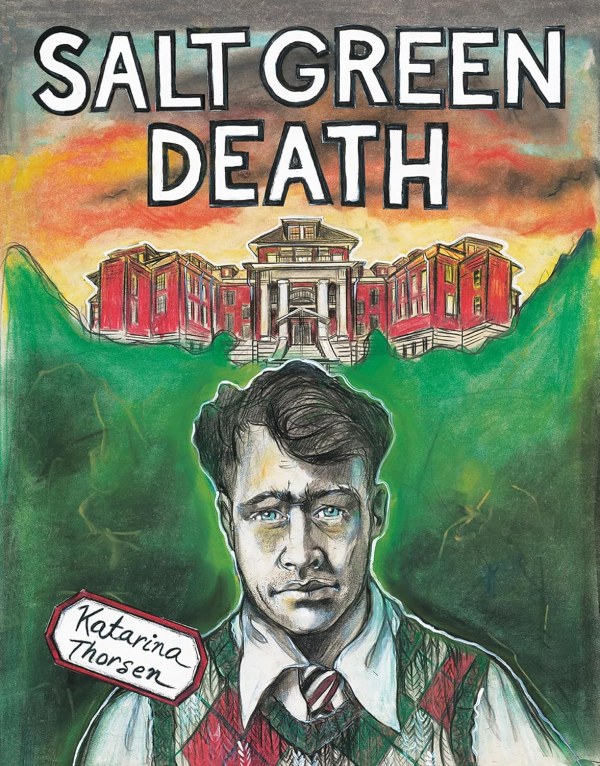 7. Salt Green Death
Writer/Artist: Katarina Thorsen
Publisher: Conundrum Press
Solicitation: The documented experiences of Joseph O’Dwyer, a young man who was institutionalized at one of Canada’s most notorious historic psychiatric institutions.
On November 21, 1948, Joseph O’Dwyer’s suicide attempt was interrupted when a bystander pulled him out of the Kitsilano Pool in Vancouver. This set a series of events in motion that ends with O’Dwyer’s institutionalization at British Columbia’s first forensic psychiatric facility, Colquitz Hospital.
Still reeling from the untimely wartime deaths of O’Dwyer’s siblings, O’Dwyer’s parents reach out to the institution repeatedly, requesting permission to bring him home. When they finally succeed in their request, the visit takes an unexpected turn. O’Dwyer is sent away once again, to an institution that used procedures that were considered unconscionable even then.
But what circumstances brought O’Dwyer to the Kitsilano Pool in the first place? In Salt Green Death, researcher and artist Katarina Thorsen delves into 15 years of Joseph O’Dwyer’s life via patient files and other historical documents. This is her attempt at piecing together meaning and context in the experiences of the O’Dwyer family―a small slice of historical graphic medicine brought to life in coloured pencil and graphite.
Why it Made the List: This is one of the most unique comic book reading experiences I have ever had. Salt Green Death by Katarina Thorsen is a work of painstaking journalistic research mixed with remarkably artistry. It has a creative spirit that is only possible with an intense combination of dedication and passion. In a way it is looking to redefine what is possible with the comic book format as much as any comic I read this year.
At the center it is telling the story of Joseph O’Dwyer, who is probably a figure you never heard of before. By diving into his life story Thorsen is able to piece together the broken way society approached psychology, depression, and mental illness. Showing how that broken foundation impacts our world today.
An attempted suicide attempt by Joseph O’Dwyer in 1948 let him to be hospitalized and eventually moved into an institution. What is fascinating is how we move to understand that journey. This is not your typical comic with panels and well placed dialog balloons that reimagine how past conversations may have gone.
Instead most pages are filled with doctor notes, observations, and pieces of interviews to gain insight into not only how those in power viewed Joseph but mental illness in general and what was seen as proper treatment. It invites you to be an active participate in how straightforward information is provided. There is an action of observation you normally do not get with comics. Typically the lens can get distorted by the comic creators. Here that lens is cleared and we are given a direct link to past events like watching archival footage of yesteryear. Artistic license taken especially with moments of flashback but rarely have I seen information provided in this fashion. It’s truly fascinating.
One thing that needs to be made certain is this book is not boring. I could see how reading lab notes that are nearly eighty years old does not sound like an ideal way to spend your free time. It all works though because of how Katarina Thorsen packs each page with so much so many stunning visuals. You see her mind at work as she looks to understand this man she has never met. Clearly she wonders what world did he come from and how to best represent that world.
I love comics that push the boundaries of what a comic can do. It does not happen often but Salt Green Death is certainly one of those books. The dedication needed simply to obtain the information gathered is something to behold and when match that with the craftsmanship to put it altogether you have one of the bold works of the year by far.
 6. Black Arms to Hold You Up
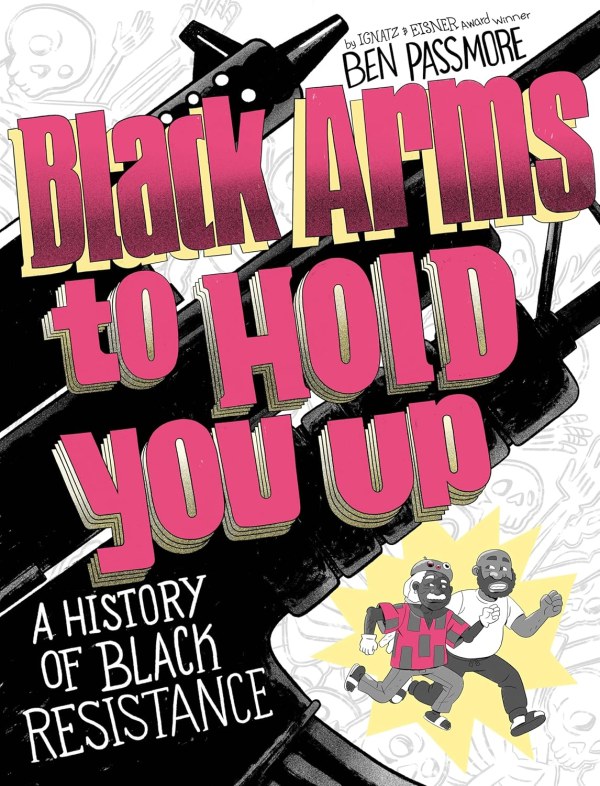 6. Black Arms to Hold You Up
Writer/Artist: Ben Passmore
Publisher: Pantheon Books
Solicitation: From the Ignatz and Eisner Award-winning cartoonist Ben Passmore comes a whirlwind graphic history of Black life, taken by force
It’s the summer of 2020, and downtown Philly is up in flames. “You’re not out in the streets with everyone else?” Ronnie asks his ambivalent son, Ben, shambling in with arms full of used books: the works of Malcom X, Robert F. Williams, Assata and Sanyika Shakur, among others. “Black liberation is your fight, too.”
So begins Black Arms to Hold You Up, a boisterous, darkly funny, and sobering march through Black militant history by political cartoonist Ben Passmore. From Robert Charles’s shootout with the police in 1900, to the Black Power movement in the 1960s, to the Los Angeles and George Floyd uprisings of the 1990s and 2020, readers will tumble through more than a century of armed resistance against the racist state alongside Ben—and meet firsthand the mothers and fathers of the movement, whose stories were as tragic as they were heroic.
What, after so many decades lost to state violence, is there left to fight for? Deeply researched, vibrantly drawn, and bracingly introspective, Black Arms to Hold You Up dares to find the answer.
Why it Made the List: Ben Passmore has long been one of the most exciting names in all of comics. With works like BTTM FDRS, Sports Is Hell, and Your Black Friend Passmore has given us some of the best comics in the last few years. He has an inventive way of approaching story. He never bothers to stick to convention. All creating his art while maintaining a strong and specific voice.
Of all of his work Black Arms to Hold You Up is the most direct with its approach. As a result of the protests in 2020 Ben and his father take a trip through time encountering differing Black militant leaders throughout history. Like a Mr. Peabody adventure for a new age Passmore and his father shows up to events like Robert Charles’s shootout, the 1985 stand-off between the black liberation group MOVE and the Philadelphia Police Department, to the George Floyd protest. All done with Passmore’s darkly sardonic humor.
What I notice about Passmore’s work is that he is not interested in comfort. This is not a monument of people in comic book form that creates heroic caricatures of people as if they were real life superheroes. To understand how we got here we must understand every piece of it we can, including the failings of past leaders that prioritized their own needs over the needs of the movement they were meant to represent.
Passmore frames this as a conversation with his father evoking works like Maus that combine the present with the past. One reason this works so well within the comic book format is because it is capable of allowing both to exist within the same space within the same time. A clear metaphorical representation of how close we remain connected to those events.
His continues an expressive cartoony style that has elements of the abstract. That certainly makes the specific comedic moments hit quite hard. The book looks as if it was shot on black and white film with stark black and grays, yet those are offset with striking uses of pink and red. From a straight forward visual standpoint it makes for captivating imagery.
With Black Arms to Hold You Up I do not get the sense that Ben Passmore is trying to make this the start and end point of the material it covers. Rather a sampler of past events that encapsulates their essence in a way that makes you want to seek a deeper understanding. The long list of book recommendations at the end make that rather evident.
As important as the message may be, Passmore understands that it will often land on deaf ears if not placed within an exciting story. That is here too. Beyond the comedy he yields from the back and forth between him and his father there is plenty of intense excitement as it rapidly moves from one event to the next. The world may not be a stake…well I guess it is just not in the typical time travel sense. In this case to save the space-time continuum one must simply work to educate themselves on the events of the past rather than trying to rewrite them.
 5. Drome
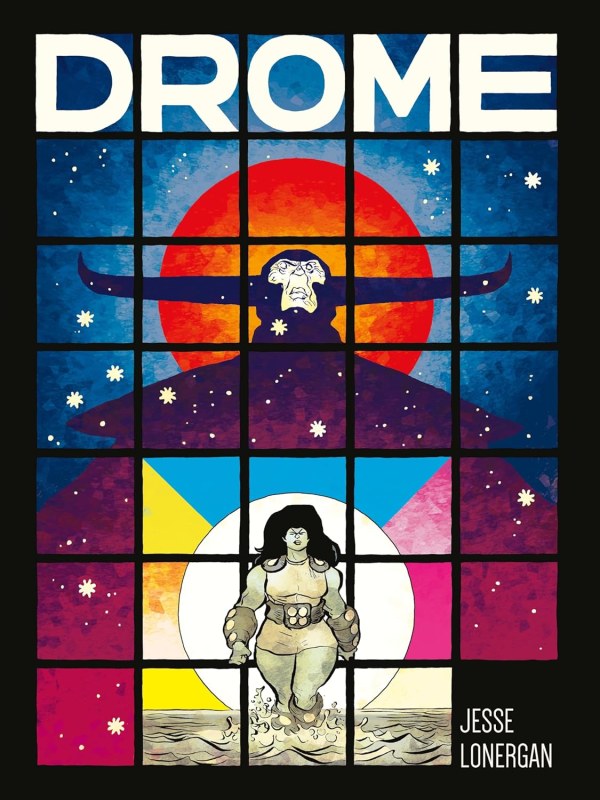 5. Drome
Writer/Artist: Jesse Lonergan
Publisher: First Second Books
Solicitation: First, there was nothing. Then, humanity was born, and an endless cycle of violence began. From the depths of the ocean, a mighty demigoddess is called forth to reign in humankind’s destructive impulses, and teach a language of peace and harmony. Civilization quickly takes root, a great city rising from the desert. But the balance between chaos and order is a fragile one, and there are higher powers at work in this strange new world.
Why it Made the List: This is some of the best visual storytelling I have read all year. Drome by Jesse Lonergan is a comic book experience not to be missed. The story, which to be honest is not all that important, centers on these god like beings creating a world and watching it descent into chaos. It’s a fantasy story that has familiar elements. You have a tyrannical leader who rules through fear and torture. Plus noble and brave warriors who look to use their power to topple his kingdom for the benefit of all.
This is an example where plot can only clue you in so much to what makes this comic work as well as it does. The dialog here is limited, you could probably boil it all down into a paragraph small enough to fit into whatever we are calling a tweet these day. This is a case where the art is doing the talking.
Lonergan is clearly having fun playing with the rules of comics especially with the way panels are used. Typically panels are used to separate action and moments within a story so they are distinct from on another. They also showcase the passage of time. Those rules are broken on a number of occasions as the action becomes so grand it breaks free from those barriers and into other parts of the page. Love the use of white space that often is use to represent these creators. At times knives and weapons are so sharp they pierce the page itself leaving remnants of their destruction behind. You may get a page that has thirty plus panels or one with just a few. This is not a one trick pony book so many compelling experiments and techniques are used to keep you engaged.
This also isn’t simply trying to be clever for clever sake. The grander point here seems to point to the act of creation itself. Looking at it in a broad sense of how it functions as well as an artists relationship to their creation. For some it is a tender and loving connection while others may have a more combative approach. No matter what that relationship is after something is created it is no longer just that person’s. Art gains a life of its own that allows it to grow in ways that are unexpected.
Drome is a book that begs to be revisited as you can pay deeper attention to all the unique choices. I rarely reread comics. This is one I will make time for.
4. Assorted Crisis Events
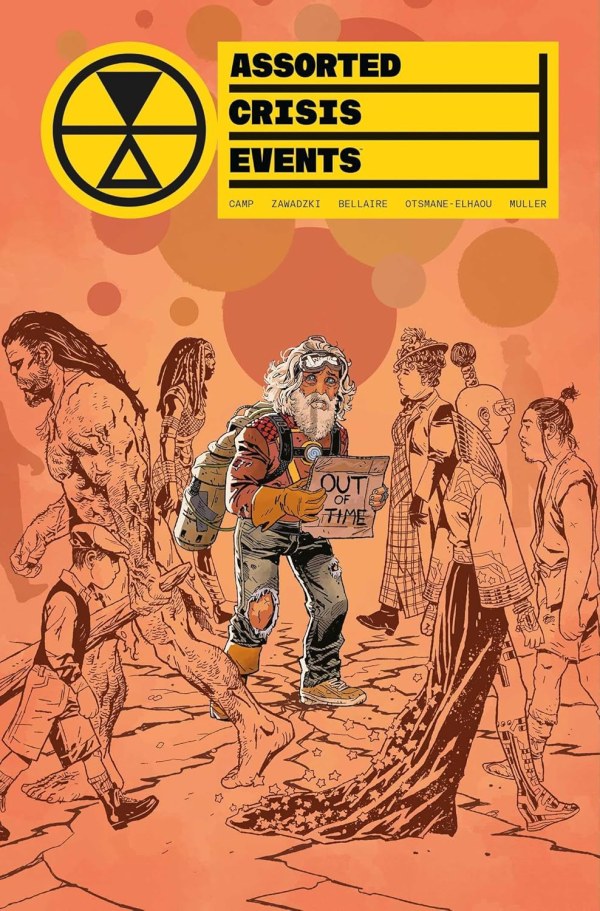 4. Assorted Crisis Events
Writer: Deniz Camp
Artist: Eric Zawadzki
Publisher: Image
Solicitation: Time is having a crisis. Mingling in the red-light district, you can find actual cavemen, medieval knights, and cyborg soldiers on leave from World War IV. Victorian debutantes amble their way into cell phone stores, confused and bewildered (what is a data plan?). On their way to work, bleary-eyed commuters get trapped in time-loops, assaulted by alternate-reality versions of themselves, and try to avoid post-apocalyptic wastelands. And LOOK: the 3:15 bus just took a wrong turn… into the neolithic era.
Why it Made the List: Even in the worst times one thing we could count on is time. It would always move forward. But what if that was no longer the case and time was broken too. That idea is explored in Deniz Camp and Eric Zawadzki Assorted Crisis Events.
Each issue takes this idea of a broken world and tells a self contained story. So many differing ideas are explored from the contrast of two towns from parallel worlds, the impact Alzheimer’s disease, the story of immigration, among others.
What this story smartly does is not get lost in the weeds of explaining the fine details of what is happening of even why. Simply time is broken and because of that there is nothing but confusion. People disappear as if they never existed, clocks have lost all meaning, but alas you still have to go to work in your mindless job as long as you still exist to them.
Much of the explanation comes through the art. Zawadzki gives us a world filled with details that tell a larger story, like a couple walking down the street where one is donned in full knight regalia and the other looked liked they walked out of Hot Topic. Sadly, there’s no Comic Con near by that could explain all this.
The art team overall is quite stellar including colorist Jordie Bellaire who keeps her palettes shifting to further sell the lack of stability but also utilizes stark red and yellows to emphasize the more extreme moments.
It’s not hard to see the connection of today’s events with the variety of topics touched upon. The sheer ingenuity of ideas along with a wondrous use of structure gave us a number of single issues that are worthy enough to make this list on their own accord let alone including the series as a whole. You can pick up any issue at any time and get everything you need. Fitting for a story that shows that order does not need to go in one direction.
 3. The Once and Future Riot
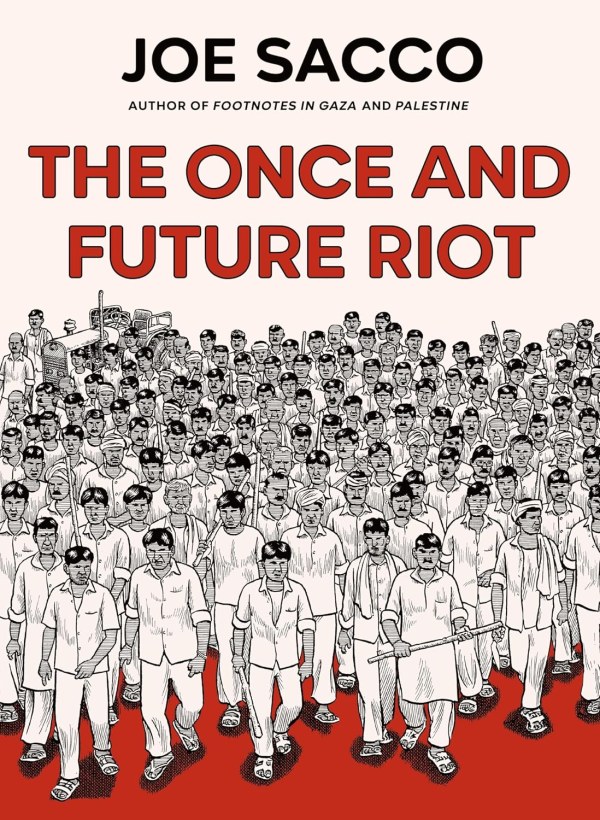 3. The Once and Future Riot
Writer/Artist: Joe Sacco
Publisher: Metropolitan Books
Solicitation: Compared to other episodes of lethal Indian communal violence, the clashes in Uttar Pradesh in 2013, the Muzaffarnagar Riot, were a relatively small-scale affair―some scores of people were killed and several tens of thousands displaced. It had happened before and will probably happen again: Hindus and Muslims, armed with guns and swords, riled up by vitriolic rhetoric and a tangle of accusations, turn on one another. The truth fragments along religious lines, both in the lead-up to the rampage and in its bloody aftermath.
In The Once and Future Riot, Joe Sacco immerses himself in Uttar Pradesh, speaking to government officials, political leaders, village chiefs, and especially the victims, who were mostly landless peasants, in a quest to understand this riot as an archetype of political violence. In the process, he probes the role of savagery in a democracy; the power of crowds, rather than leaders, to influence the course of events; the collision of competing narratives; and the accounts that perpetrators construct to explain away their participation in bloodshed.
Why it Made the List: Joe Sacco is not only one of today’s greatest comic book creators, he is one of today’s greatest journalists. Not something you can say about a lot of people but works like Palestine, Paying the Land, and Footnotes in Gaza helped prove that fact. In his latest work The Once and Future Riot he turns his investigation to the 2013 Muzaffarnagar Riot in India to learn the cause and what lessons can be learned for the betterment of all.
To achieve this goal Sacco does what he does best. He interviews individuals of all different shapes, sizes, differing political statuses, religions, as well as professions. From government officials to religious leaders to everyday individuals simply trying to live their life Sacco tries to understand their world and where the heart of this conflict lies.
The tension here is largely between Hindus and Muslims and as often is the case this was not an isolated incident. Sacco also works to provide historical context to how we got here. This is journalism at its finest. Finding an issue that is not getting nearly enough attention on a global scale and working every corner to understand the cause, the effect, and why it is important to know about. You see the toxic nature of misinformation and how much perspective impacts truth.
A question that always comes up with Sacco’s work is why do this type of story in comic book form rather than say a typical documentary. Sacco himself has spoke on this on a number of occasions but from the outside in the lack of a camera allows for the guards of individuals to be taken down. They aren’t as direct in performing for a perceived audience. Sacco’s style and pencils are as strong and distinct as ever. You never get the sense this is a person who has been doing this type of thing for thirty plus years at this point. His pages of full of vivid detail a give you so much emotion and thought behind the words being spoken. Sacco uses subtly exaggerated facial features or proportions to make you understand the nature of the person you are seeing.
As someone who was completely ignorant to Muzaffarnagar Riot along with the severity of the conflict between the Muslim and Hindu populations in India this was a massive eye opener and a reminder of how big this world is and how little we know about it. I adore comic book journalism as it shows the medium I love is as capable as any to tackle the hard topics and perhaps even more equipped at times to do just that. Joe Sacco has long set the bar regarding the power of the comic book medium and The Once and Future Riot is yet another example of that fact.
 2. Tongues
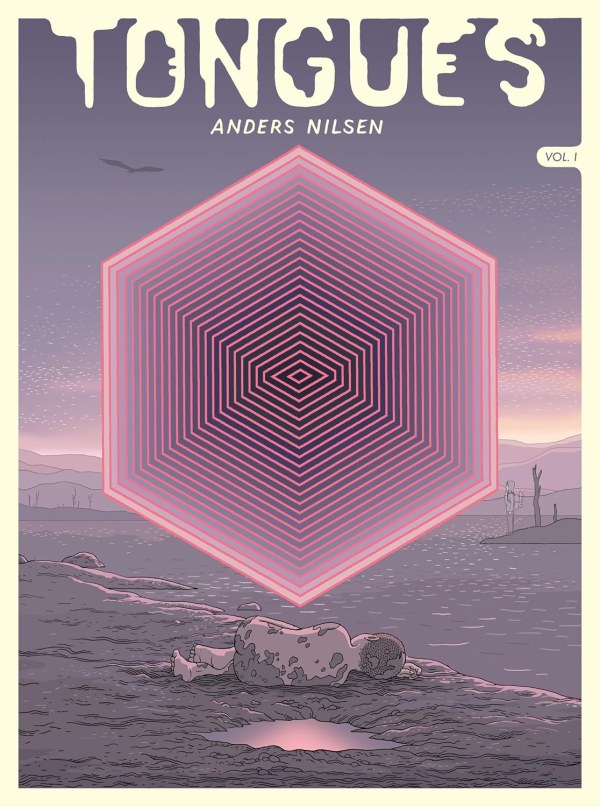 2. Tongues
Writer/Artist: Anders Nilsen
Publisher: Pantheon Books
Solicitation: Set in a version of modern Central Asia, Tongues is a retelling of the Greek myth of Prometheus. It follows the captive god’s friendship with the eagle who carries out his daily sentence of torture and chronicles his pursuit of revenge on the god that has imprisoned him.
Prometheus’s story is entwined with that of an East African orphan on an errand of murder, and a young man with a teddy bear strapped to his back, wandering aimlessly into catastrophe (a character readers may recognize from Nilsen’s Dogs and Water). The story is set against the backdrop of tensions between rival groups in an oil-rich wilderness.
Tongues is both an adventure story and a meditation on human nature in our present fraught, historical moment.
Why it Made the List: It’s important to know your limitations. Sometimes I will come across a comic and after reading it feel like I just don’t fully have the words to adequately describe what the reading experience is exactly like. Like an inside joke that required your presence at its foundation, you simply cannot be given the information the relive that moment like those that were there. Such is the case with Anders Nislen’s latest graphic novel Tongues. I can certainly give a brief overview of what the book contains, but there’s simply so much to its creation that it’s best to experience it yourself.
Now I say that knowing Tongues is not going to be universally loved by everyone who reads it. It’s complexity along with the amount of room it leaves for interpretation may cause frustration from many readers. Personally I found the sheer ambition of this work along with some truly remarkable moments of craftsmanship to be some of the most captivating reading I have done with a comic all year. With this just being the first volume excited to know this story is just beginning.
At its heart this is a retelling of the myth of Prometheus the titan who aided humanity through the gift of art, technology, and knowledge by stealing the fire from Olympus. He was then be punished for that crime by being forever chained to a rock and having his liver eaten by an Eagle. Only for it to regrow and begin the cycle anew each day.
Within that centerpiece are other stories such as a young African girl who has a strange ability to speak to animals and an unknown past that becomes kidnapped for reasons not fully known. There is also an American hitchhiker who finds himself in the middle of a War Zone as a self-prescribed banishment due to his own previous misdeeds. While loosely connected each storyline is a quest into the chaos of humanity and the sins of humankind. Perhaps it has come to the point where the gifts of Prometheus have been misused so much the world simply cannot suffer these consequences any longer.
Tongues is a dense narrative that would be cumbersome to follow with a lesser artist but Anders Nislen works wonders with a page breaking from convention at nearly any chance he can. Even at times including pages that fold out past the confines of the graphic novel like a grown up version of a pop up book minus the 3d Effect. Panels are rarely simple squares, rather choosing shapes like hexagons or oblong circles that tend to create images within themselves. These geometric patterns help convey emotions that words sometimes cannot fully grasp. It is a book that keeps you guessing not just in a narrative sense but how each page will look as it changes rapidly with steady variation.
Despite the complexity of this work there is one word that lingers throughout both while reading it and while looking back at that experience and that word is conflict. In a very basic sense much of this is about the conflict of humans and the way in which we destroy each other and the world we call home. Yet at the same time showing that humans are capable of great things and not all the gifts of Prometheus have been tossed aside. Artistically this is a book rich with detail but also one that utilizes abstraction and symbolic imagery that can ponder one’s mind to wonder what exactly is being shown.
There are many questions, and no easy answers. I would be lying if I said I knew exactly what is being proposed within each page as I found myself having conflicting interpretations after multiple rereads but that is also what I found so special about it. I rarely reread comics ever but found myself wanting to return to this again and again. If the ultimate test of art is the way it makes you feel then Tongues passes on every level for me because it draws out a cavalcade of emotions from inspiration, to utter sadness, as well as thought provoking inquiry regarding life’s biggest questions. Simply put this is why I read comics.
 1. The Last Time We Spoke: A Story of Loss
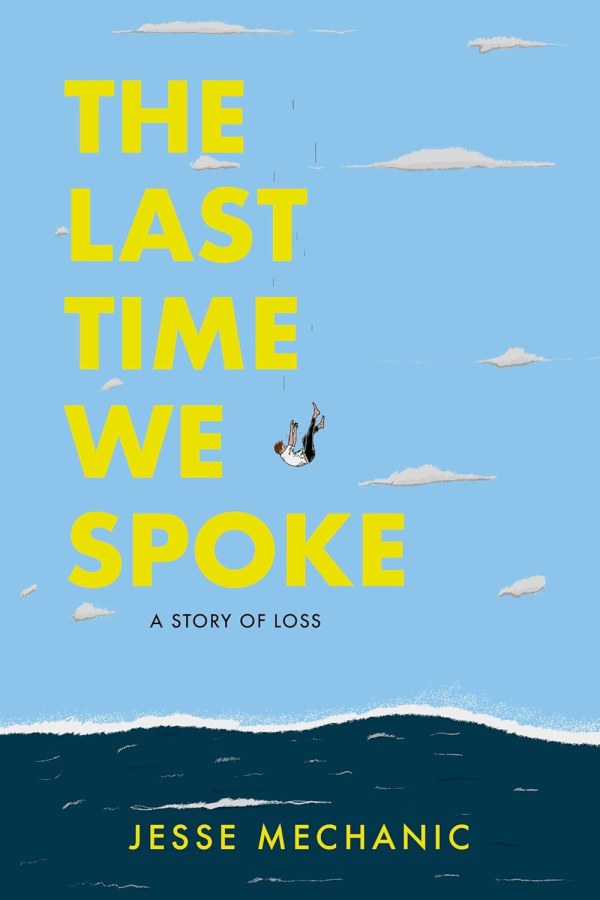 1. The Last Time We Spoke: A Story of Loss
Writer/Artist: Jesse Mechanic
Publisher: Street Noise Books
Solicitation: An emotional and heartbreaking memoir of the author’s lifelong struggle with his mother’s death from cancer.
Grief never goes away.
When he was a teenager, Jesse Mechanic’s mother passed away after a long struggle with cancer. In this memoir, he looks back on that time, and on the ways that experience followed him throughout his life. Struggling with school while dealing with attentional problems and the overwhelming tsunami of grief, this book tells the story of Mechanic’s slow work to figure out a life for himself. It’s about obsessive-compulsive disorder, intrusive thoughts, and depression—straight-A’s turning to straight F’s, and smiles to blank stares. It’s about what loss can teach us, and how trauma can be both debilitating and beautiful. It’s about standing in dark rooms for long enough for your eyes to adjust.
And graffiti. It’s about that too.
With powerful visuals and thoughtful, poignant text, this graphic memoir challenges readers to keep going in the face of the hardest times.
Why it Made the List: When I started this list I was rather blunt regarding how this list is wrong because as objective as I try to be ultimately I am viewing all of these works through my personal perspective. For no book is that more true than my number one book of the year The Last Time We Spoke: A Story of Loss by Jesse Mechanic.
Is this the most ambitious comic book I have read this year in regards to its ingenuity of form or how it tries to rewrite the rules of what comics are capable of doing? Not necessarily but I do admire the lack of desire of Jesse Mechanic to tell this story in the standard comic book format. You will be hard pressed to find one panel through the entire issue as he favors symbolic imagery mirrored with prose.
Is this the most layered text I have read this year with a narrative that is rich and full of surprise twists, turns, and maybe even a few cartwheels? Not at all. In fact it’s the exact opposite as it is a very straightforward story of Jesse Mechanic going through the process of grief after losing his mother. And right there is why it hit me as much as it did.
Reading this a few weeks after losing my dad was a therapeutic experience that I am fearful to mention in case insurance charges me for seeking out of network care. I made the foolish choice thinking I could read this as I was out in public. When droplets hit the page that were not from the very specific isolated rainstorm I realized that maybe that was not the smartest choice. Now my story and Mechanic’s are quite different. Mechanic lost his mother while in high school while I was forty-one, but what is clear is that losing a parent has a similar impact no matter the age.
Mechanic begins the book by writing to his mother. Walking her through what he remembers surrounding her death and the impact it had on his life. I have read many comics about grief and few have had the impact of this work. That approach was a reason why. It was like getting to see into the emotional truth of the guilt and complex emotions someone has been feeling for decades and working through it in an actual healthy way. Reading it was cathartic. I could only imagine doing it evoked a similar response.
Eventually Mechanic does turn his attention to the reader talking more broadly about grief and what it entails. He’s never trying to act like an expert on the matter just using his own experience and what he learned and went through. Grief is one of the weird things we all go through, is rather challenging to navigate, yet most cultures do not really talk about it. The Last Time We Spoke: A Story of Loss was not just a great work of art but something that helped make my life better. For that I am grateful. The least I can do is make it my top comic book of the year.
(101 – 76 | 75 – 51 | 50 – 26 | 25 – 1)

chevron_leftPrevious page

Be the first to leave a comment