


Top 101 Comics of 2025

 50. Beat It, Rufus
 50. Beat It, Rufus
Writer/Artist: Noah Van Sciver
Publisher: Fantagraphics
Solicitation: Rufus Baxter is an aging, professionally unemployed loser, desperately — delusionally — hanging on to his 1980s hair metal fantasies of headlining arenas, despite so much evidence to the contrary (like audience members ducking when he tosses promo t-shirts at an open-mic night). The rest of his bandmates in Funky Cool died decades ago in a horrible plane crash on the cusp of their first big break. When he gets kicked out of the Denver storage unit he’s been illegally sleeping in, his only prospect is a last-second wedding gig the very next day — in Wyoming. A hop in his car, and possibly a peyote button or two, sends Baxter on a psychedelic and existential road trip through his past, and forces him to confront every bad decision he’s made along the way.
Beat It, Rufus is very much a kindred spirit with Van Sciver’s Fante Bukowski series, a comedic character study both played for laughs but also infused with a surprising gravitas that has you rooting for Rufus despite having every reason not to. Van Sciver’s comedic and graphic talents are in peak form in this original graphic novel, his follow-up to the award-winning and critically acclaimed graphic bio, Joseph Smith and the Mormons.
Why it Made the List: Noah Van Sciver is just so good at creating characters that are deeply and severely flawed. Despite their issues they refuse to get out of their own way. Despite all their faults remain a compelling character to read about. Rufus fits that definition perfectly.
He is the type of person everyone has probably run across in one way or another. That person who never quite made it, is still trying to do it, and every bad thing that happened to them was some else’s fault. Also in their mind anyone who has made it doesn’t nearly have the talent that he does and only got to where they are because the world is so unfair. So yea, pretty much 90% of wrestling podcasts nowadays.
It is basically a road trip story of Rufus traversing the country side in hopes of capturing what could be his last big break. As road trips often do sidetracks occur pushing him to confront his past as he may not have been the main character of life as much as he thought.
Smartly Sciver does not try to create a story about redemption. Not much transformation is taking place despite the opportunities to do so. If anything it is a cautionary tale regarding hoping for change in places where it is never coming. If you can settle in Rufus does becoming entertaining and maybe even a little sympathetic as well How long those feelings last are very much up to the reader.
 49. The Legend of Kamui
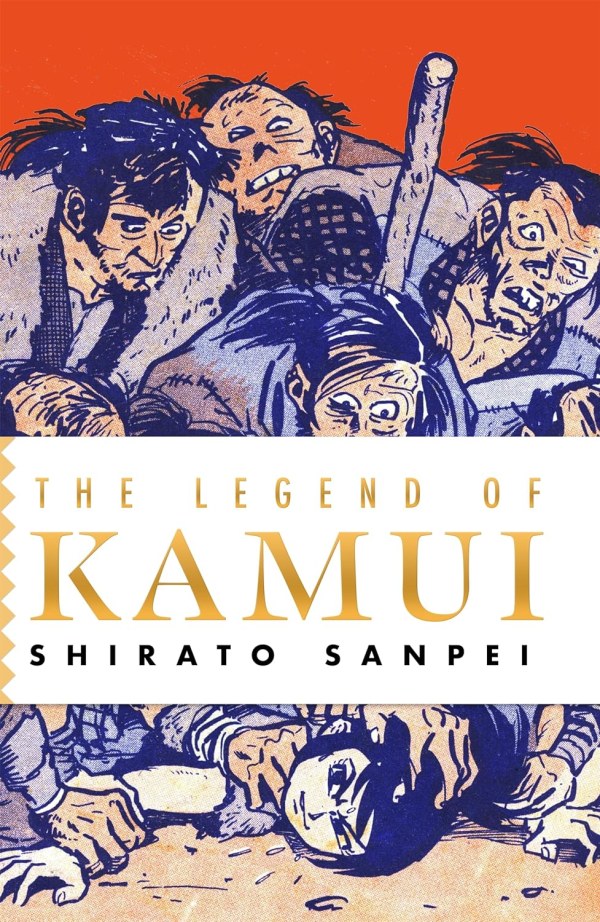 49. The Legend of Kamui
Writer/Artist: Sanpei Shirato
Translator: Alexa Frank, Richard Rubinger, Noriko Rubinger
Publisher: Drawn and Quarterly
Solicitation: At long last, manga titan Shirato Sanpei’s groundbreaking epic makes its way into English. Celebrated as a watershed of both the Japanese counterculture and dramatic, longform storytelling in manga, The Legend of Kamui serves up clashing swords and class struggle to create a timeless political allegory set in feudal Japan. This ten-volume series is a must-have for fans of samurai and ninja manga and anime, and of other giants of postwar manga like Tezuka Osamu, Mizuki Shigeru, Tsuge Yoshiharu, and Lone Wolf and Cub’s Kojima Goseki.
It’s the 17th century in Japan. Child outcast Kamui lives on the fringes of a miserably stratified society. Fueled by pure grit, rage, and a dash of cunning, his only way out is to take up the mantle of ninja. Follow scrappy peasants, cold-blooded ninja, and warriors both disgraced and exalted as they navigate the unforgiving hardships of a violent yet hopeful age. With its vivid and critical attention to social injustice and environmental issues against a backdrop of heart-pounding action and romance, this multilayered gekiga drama not only redefined ninja and samurai fantasy, it also offers astonishing parallels with the modern day.
Originally serialized between 1964 and 1971 in the legendary alt-manga magazine GARO, The Legend of Kamui is translated by social historian and decorated academic Richard Rubinger with Noriko Rubinger. Additional translation by Alexa Frank.
Why it Made the List: Once again another addition to this list that some may call a cheat since this series is sixty years old at this point. People may be wondering if Amazing Fantasy #15 is coming up next. Again, only counting this since it is the first time this is available in English.
As someone who has not read much classic Manga this was a great opportunity to right that wrong. My knowledge of this series was next to nothing going in but I understand now why so many wished The Legend of Kamui to be available a lot sooner. Beyond the story itself this issue includes insight from Sanpei Shirato regarding where these stories came from and what he was hoping to accomplish.
Taking place in 17th century it is a harsh look at what life was like and the systems that were in place. How those systems exploited the most vulnerable to the benefit of the most powerful. Showcasing the layered system of society that carved out specific roles for individuals as well as a hierarchy that ensured those on the bottom where conflicting with each other rather than those who put the system in place.
Kamui is that catalyst of this story living outside those social norms and acts as an agent of chaos when the time was right. This was also counterbalanced with epic scenes of the harsh life of nature compared to the way humans operate. Including at tale of a wolf family that gets incorporated into Kamui’s world. The wolf lives outside human society, hunted simply for existing, forced to keep moving, never allowed to settle. That directly parallels Kamui’s life as a fugitive ninja.
For those that claim that Manga doesn’t get involved in politics should understand that social commentary was a main feature of this landmark series.
 48. Search and Destroy
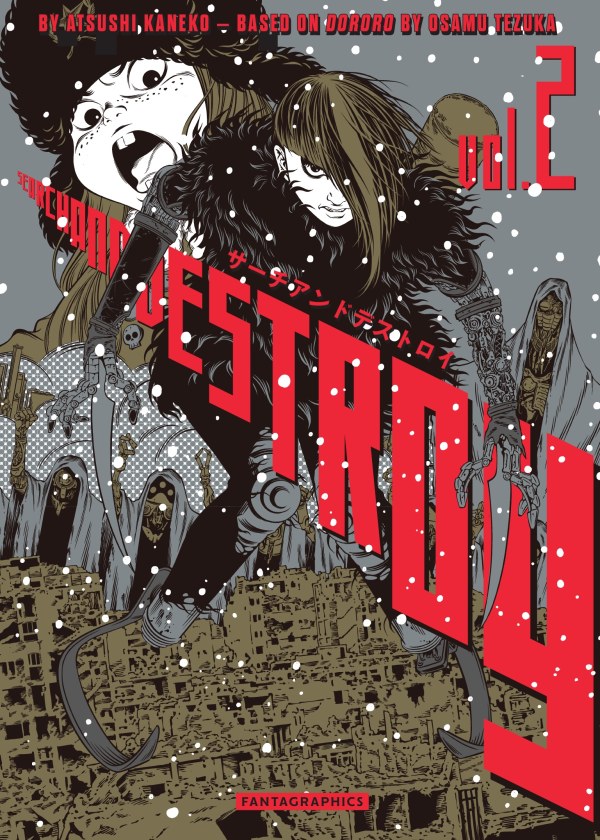 48. Search and Destroy
 Writer/Artist: Atsushi Kaneko
Translator: Ben Applegate
Publisher: Fantagraphics Books
Solicitation: The second volume in manga creator Atsushi Kaneko’s cyberpunk retelling of the timeless, Eisner Award–winning Dororo by “God of Manga” Osamu Tezuka.
Hyaku has been betrayed. A fearsome killer, her body more machine than flesh, she has learned the truth: Her human body parts were bartered away when she was a baby, and what remained was left for dead. Filled with incandescent rage, Hyaku embarks on a vengeful rampage to dismantle the monsters who took her apart and violently reclaim what she has lost. But as she replaces her cybernetic implants with the flesh and blood she has been denied, a new emotion sets in: fear. Fear that her human body will be too weak to finish what she started ― and fear of what she might learn next about her own past. Will her anger and ruthlessness be enough to propel her to the final showdown? Or will revelations about the depravity of her world consume her, along with everyone around her?
Why it Made the List: When it comes to Manga sometimes people forget series exist outside of the world of Shōnen Jump. Publishers like Dark Horse, Drawn and Quarterly, and as seen here Fantagraphics have published plenty of Manga as well. If you think those publishers are just left with the scraps that is not the case whatsoever.
Search and Destroy is a pretty straightforward story when it comes to the general narrative. A quick way to look at it is The Last House of the Left by way of John Wick in the world of Blade Runner. Hyaku has had her body parts stolen from some truly evil people. Now this half-cyborg takes aim at reclaiming what has been stolen from her on this brutal revenge tour.
That plot gives this story a momentum that never wishes to lead up. We do get some storylines that build out this world more to add context to the chaos, but those are small reprieves to the overall endless action.
Atsushi Kaneko has a cinematic style that is responsible for that energy. There’s plenty of Steam-Punk influences and for those that like cybernetic body horror you will have more than what you will know what to do with. We got two volumes this year including the conclusion of the series. So now if you are interested you can read the entire run. And it is a journey worthy of any fan of manga, science fiction, and action in general.
 47. Absolute Martian Manhunter
 47. Absolute Martian Manhunter
Writer: Deniz Camp
Artist: Javier Rodríguez
Publisher: DC
Solicitation: Beyond Mars, beyond physical form, beyond human understanding…what’s left is the absolute Martian Manhunter! Brought into the Absolute Universe by Deniz Camp and Javier Rodríguez, Absolute Martian Manhunter reinvents the Justice League’s resident Martian from top to bottom, taking him on a mind-bending, psychedelic journey that transcends dimensions.
An astonishing new version of DC’s iconic characters is here! In the Absolute Universe, familiar heroes have been reinvented from the ground up with origin stories that completely reshape both their abilities and their circumstances but maintain the core characteristics than fans have known and loved for decades!
FBI Agent John Jones has a problem. His brain has been infected by an alien consciousness calling itself “the Martian,” and its perception of reality is utterly incomprehensible to the human psyche. Now he must navigate this new status quo, all while balancing the deeply grounded and important duties of his day job! Deniz Camp and Javier Rodriguez take the Martian Manhunter into the Absolute Universe on a mind-bending, psychedelic trip!
Why it Made the List: I told you more Absolute Comics would be making this list. One thing I respect about the Absolute line of comics is that they are willing to take some massive risks. Types of risks you do not normally see for a major publisher like DC and Marvel.
They had to know Absolute Martian Manhunter would be a book that probably would not work with a lot of readers. It does not follow normal plot structure, it often leaves a lot of key details out, and does not bother to try to conform to what the expectations are with superhero stories. So I understand those who cannot connect with this whatsoever. It’s exactly in my wheelhouse.
Javier Rodríguez is a big reason for that. He has been my favorite current artist since syncing his work on Spider-Woman with Dennis Hopeless as he did things in a comic book I simply did not know was possible. Working as a colorist as well is key because color plays such an important role within this series. It tells us as much of the story as the words on the page. It is a book that asks a lot of the audience and for some it may be too much. I personally was excited to answer those questions.
 46. FML
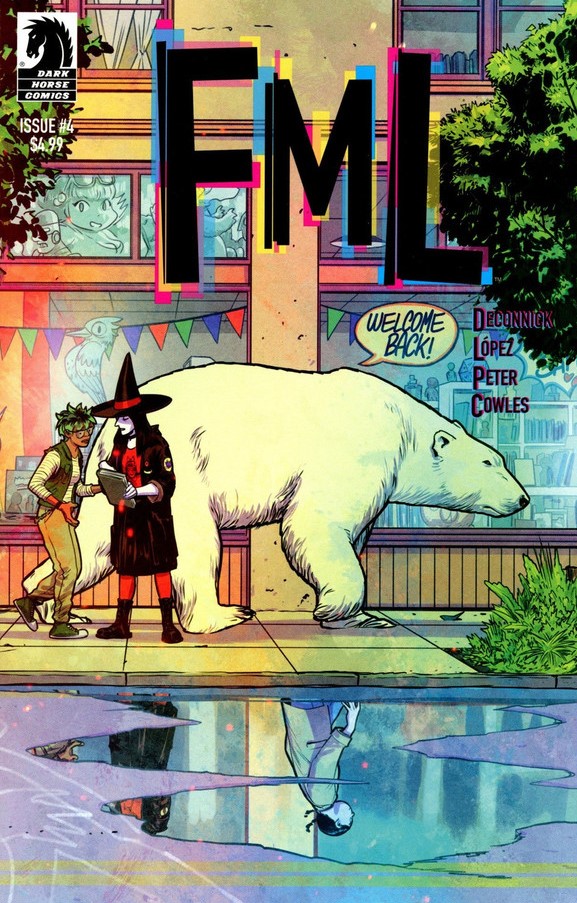 46. FML
Writer: Kelly Sue DeConnick
Artist: David López
Publisher: Dark Horse
Solicitation: From the Eisner award-winning creators who brought you Captain Marvel, Bitch Planet, and Wonder Woman: Historia comes this genre-busting, apocalyptic odyssey about a group of metal kids who face a medley of bizarre foes and encounters in Portland, Oregon during a worldwide pandemic.
Riley is a teen that sketches out his heavy metal future with a ballpoint pen between monster movies and band practice. But musical stardom needs to compete with high school, the temper of a former Riot Grrrl mother, the morbid obsessions of a goth sister, and the eccentricities of bandmates that threaten to drive him and everyone around him insane.
The balance gets harder after a ritual during a party in Portland’s Forest Park causes him to wake up one day to discover that the creatures, witchcraft, and metal world he’s obsessed with may be a bit closer to home than he preferred.
Why it Made the List: There is that old adage that you should not have too many hats. When you pile gimmick on top of gimmicks you overwhelm the audience to the point they do not where to look. The thing about rules like that you can break them if you have the right talent and approach. Exhibit FML for an example of how to do just that.
I find it hard to quantify this series because it is made up of so many ideas.. You have a kid who has been transformed into a giant monster, a murder mystery, rock band drama, sink holes, and on top of all that parents trying to parent during the biggest global pandemic in one hundred years. Plus more even beyond those ideas.
So why does it work? Partially being overwhelmed is part of the point. Much of this is about how societal changing events quickly becomes a normal part of life. For example twenty to thirty years ago I did not think people would find schools regularly having active shooter drills an acceptable part of life. We have gotten to the point now. So a person who is changed into a giant monster creature eventually just becomes a thing that happened and there are more pressing issues.
When you have David López as an artist that does not hurt either. At times he will incorporate imagery that looks like it comes from sketches inside a notebook. Considering much of this story is about a high school student that gets you inside that mindset. I do not envy him with all the different things he needs to figure out how to draw within this comic. Maybe he loves it. That’s the vibe I get from reading it at least because these characters are filled with expressive emotion from pure rage and overwhelming hysteria.
I do not think we have as a society have reflected on how much the Covid Pandemic damaged a part of our collective psyche. FMLis a reflection of that fact wrapped into a entertaining emotional driven story about a family that very much cares about each other.
 45. Flip
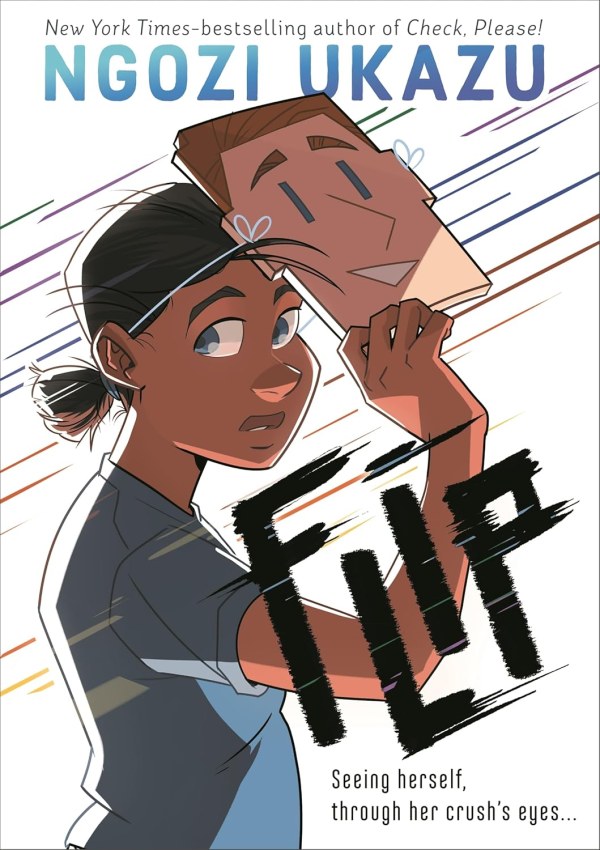 45. Flip
Writer/Artist: Ngozi Ukazu
Publisher: First Second
Solicitation: Chi-Chi Ekeh has one huge problem: She keeps having crushes on rich white boys who have no idea she exists. Enter Flip Henderson, the most popular boy at school, who receives Chi-Chi’s private video proposal to go to senior prom.
But when Flip rejects Chi-Chi in front of their entire class, what happens next is completely unexpected: Chi-Chi—shy nerd and scholarship student—switches bodies with Flip. Suddenly Chi-Chi is 6’1” and cool, while Flip gets a crash course on Chi-Chi’s life—that is, k-pop, hair-braiding, and being a poor kid of color at a rich white private school.
With graduation looming and their body swaps lasting longer and longer, Chi-Chi and Flip must form the most unlikely friendship their school has ever seen. But will they survive senior year? And, most importantly, can they find a way back to themselves?
Why it Made the List: The old adage that you don’t know someone until you walked a mile in their shows is well known but typically not something that is at all possible. That’s where art comes in as Ngozi Ukazu’s latest graphic novel Flip shows what happens when two college kids from different worlds switch bodies and have to navigate society as someone else.
Yes we all know about Freaky Friday but despite what Disney might think they did not invent the body swap idea. So the question becomes what does this take do with a well known concept? One of the biggest differences here is that these are not family members but rather students of different genders and vastly different ethnic, social, and economic backgrounds.
It is even more awkward because one of our main characters Chi-Chi actually has a crush on Flip Anderson. That is the exact person she swaps bodies with shortly after the entire college finds out about her admiration for Flip as a private video gets played in the middle of class by mistake.
Certainly there are moments of levity within this story but this is going for something much grander than silly hijinks of what a situation like this brings, it is going for something far more real. There is the journey Flip goes under seeing how the world is far different than the one he knew and much more complex than his daily life. It does not shy away from difficult issues like race, ethnicity, along with learning to respect cultures outside your own.
Really though this is Chi-Chi’s story as much of her life she has been the quiet shut-in that is ignored by her peers and still dreams of being accepted. She seeks validation from her wealthier classmates because perhaps then she can finally belong. Now she is forced to see herself through the etyes of another individual and maybe that is the only way she can finally find a way to love what she sees.
I appreciate this took the Groundhog Day approach and didn’t get bogged down in the weeds trying to explain what happened and why. Something out of the norm of reality has occurred and now the quest is to understand what is happening and finding a way to stop if, if they can.
If you have read any of Ngozi Ukazu’s previous work you know what to expect with her art style. Characters with expressive faces and movements that help bring to life the insanity of the situation. Body language is so important within this issue as it is often the only way to know who is in what body and when. Small details like posture help it make it easy to identify. This tends to work most with the six panel design that keeps a quick pace and focus on the characters.
Flip shows the originality does not necessarily come from concept rather through execution. Self-worth is vital but not easy to obtain and within this story we see that struggle. Rarely are body swap tales associated with the reality of life but Ngozi Ukazu found a way to do just that and make plenty of time to entertain along the way as well.
 44. Witchcraft
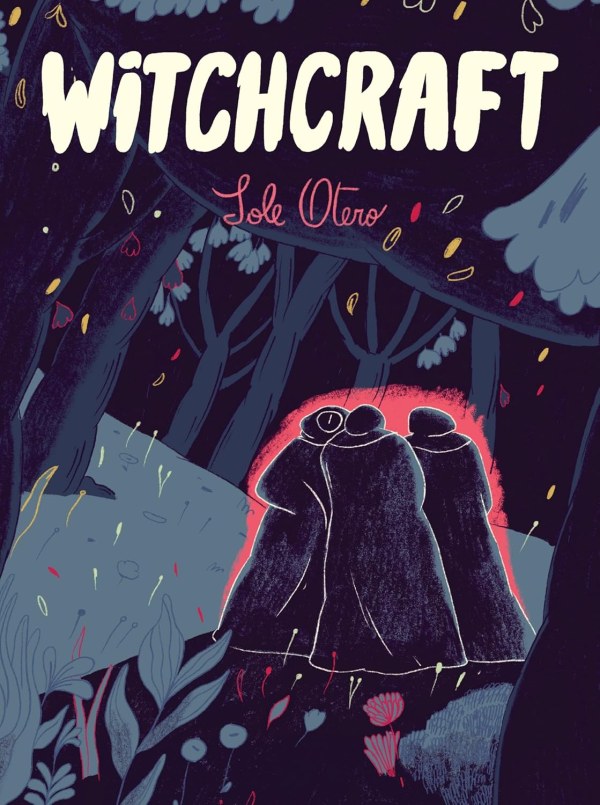 44. Witchcraft
Writer/Artist: Sole Otero
Translator: Andrea Rosenberg
Publisher: Fantagraphics
Solicitation: Three mysterious sisters, dancing at the knife’s edge of benevolent and malevolent, lie at the heart of Witchcraft — a maelstrom swirling together horror and comedy, magic and religion, colonialism and indigenous folklore.
Buenos Aires, Argentina, 1768. It is a dark and foreboding night when the boat arrives from Europe, bringing three shadowy figures to shore. The María sisters have come to take the New World by storm. At once righteous and menacing, the sisters will exert their insidious powers over generations, leaving a wreckage of shattered spirits in their wake.
Told through the eyes of the people whose lives the sisters have cast asunder, Witchcraft is a mesmerizing mystery to piece together. Strange magic, dark humor, and a fiery undercurrent of female rage cohere into a heady tale of colonialism, indigenous folklore, and modern agoraphobia. A kaleidoscopic work of literary fiction, crafted with vision and verve, that assures Sole Otero as one of South America’s most dynamic cartoonists.
Why it Made the List: I am not the biggest fan of using the term weird when describing art because it is such a subjective term and can have such a negative connotation. With that said Witchcraft is one of the weirdest books I read in 2025 and I mean that in the best of ways.
First Sole Otero has such an exaggerated art style that has no desire to live in a world of realism. Characters have these small heads with the broadest shoulders that you can imagine which allows for exaggerated body language to better understand their mindset. This style allows for approaching identity in different ways as everyone shares a similar body type. People are not defined by the specific characteristics we are used to seeing.
The story casts a wide net with a multitude of time lines and an extensive list of characters but the central story is on the María sisters. They are mysterious force with a special gift for messing with people especially guys who like to look where they shouldn’t. The shifting narrative can be a challenge to keep up with but Otero creates such impressive page layouts to show we are diving into the unknown.
Coming from Argentina it has a take on Witches is quite different than what US culture. This ties more into European folklore and that clearly shapes the social commentary as well. One that speaks to issues on a generational level as well as how they present themselves in today’s world. So if you are looking for a different take on a classic idea you will find it here.
 43. Hello Sunshine
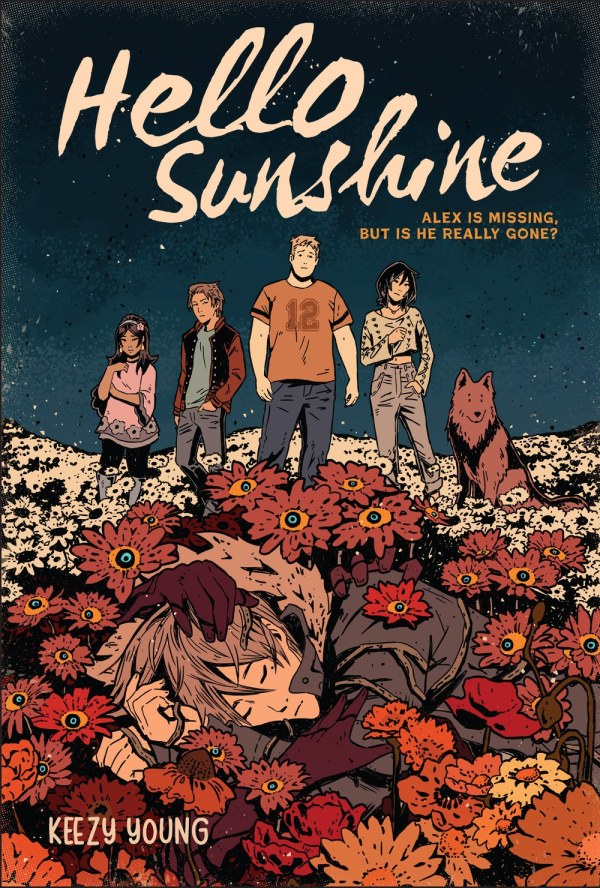 43. Hello Sunshine
Writer/Artist: Keezy Young
Publisher: Little, Brown and Company
Solicitation: Noah is heartbroken. He returns from Bible camp to find that Alex, his secret boyfriend, has had a breakdown and disappeared. He wishes more than anything that he hadn’t left that day.
Sky is determined. She’ll stop at nothing to find her childhood friend, even if it means alienating the people she loves.
Izzy is ashamed. She knew something weird was going on with Alex, and she didn’t say anything to her boyfriend, Jamie—Alex’s twin brother. If she had, would Alex still be here?
Jamie is angry. Angry at Alex for being gone, angry at himself for not noticing something was wrong, and angry at his long-dead mother, Desdemona, who had problems of her own.
But what if there was something more to Desdemona’s demons? Why is Jamie seeing her ghost? And can he get past his hatred of her if it means finding out what happened to his brother?
Why it Made the List: We don’t have enough mystery comics. I had that thought when reading this as the story centers on the disappearance of a teenage boy. His friends appear to be the only people capable of finding him. As well as the only ones invested in the truth as well. What they are really concerned about is the condition he will be in if they find him, and if their efforts are far too late.
When supernatural elements began to be introduced into this story I was a little worried. They did not seem necessary because the character work was strong on its own. Beyond that where you have a story that exists in a supernatural world it can diminish the mystery. Suddenly everything is possible so the solution is less satisfying to discover. Mysteries are usually best because of the limitations of what could have happened. I was glad to see my initial concerns proved to be unwarranted. This was able to find a solution that existed outside the norms of reality that remained satisfying to discover.
What hit home the most with this was how this operates to try to undo the damage the horror genre has done to mental health. Something I never really thought about much before it became evident that Keezy Young was doing. Showing how taking heartbreaking conditions and making mindless horror villains out of them can lead to dangerous misconceptions. This takes that trope and reflects it back upon itself.
 42. Escape
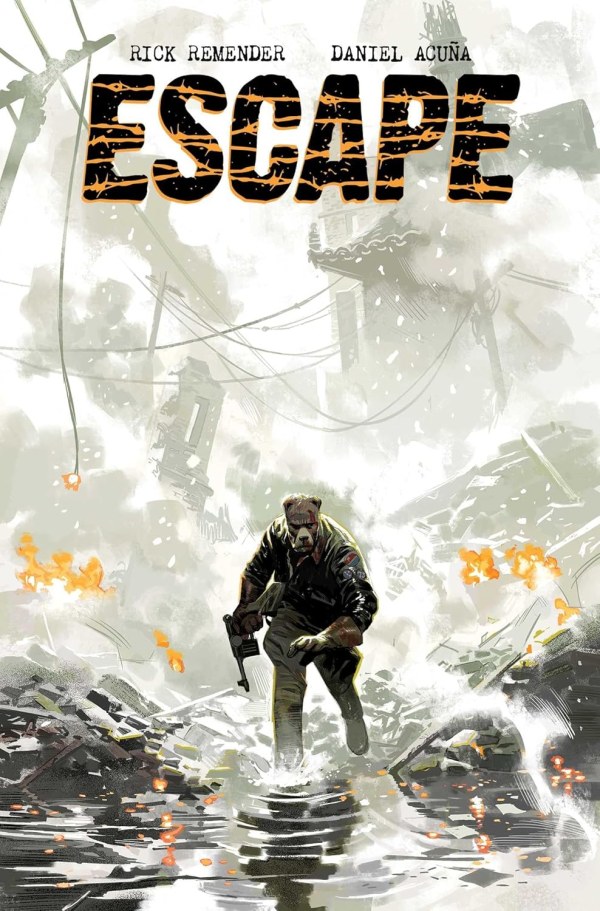 42. Escape
 Writer: Rick Remender
Artist: Daniel Acuña
Publisher: Image
Solicitation: SHOT DOWN. HUNTED. OUT OF TIME.
Set in a brutal, fully painted world of anthropomorphic animals — equal parts Inglourious Basterds and Watership Down — ESCAPE is a gritty, bullet-riddled journey through war’s scorched aftermath. It’s about the violence we inflict, the souls we try to save, and the courage it takes to crawl out of fire.
From the creative team of New York Times bestselling author RICK REMENDER (DEADLY CLASS, Uncanny X-Force) and powerhouse DANIEL ACUÑA (Captain America, Black Panther) — the duo behind Marvel’s Uncanny Avengers — comes a savage, full-throttle wartime thriller where survival isn’t given… it’s taken.
Milton Shaw is a battle-hardened bomber pilot, flying missions over a war-torn world ruled by a ruthless empire. But when his plane is shot out of the sky, Milton wakes up behind enemy lines — in the smoldering ruins of a city he helped burn. And in less than 24 hours, his own side is dropping the big one to finish the job.
Now, injured, unarmed, and being hunted through enemy streets, Milton’s only shot at escape comes from the unlikeliest place: a grieving father and his son — civilians shattered by the same fascist regime that rules this land with an iron claw. Enemies by blood. Allies by circumstance. Together, they’ll have to fight their way out before the bomb drops and erases everything… and everyone.
Why it Made the List: Sometimes a comic will come out and I will think…did this come out just for me? So far the answer has always been a resounding no but maybe one day that will change. With Escape you have Rick Remender who is one of my favorite writers. Daniel Acuña is an artist I adore. So them teaming up is a dream come through. Big fan of stories with anamorphic animals that are geared towards an older audience a la Blacksad. Lastly not only is this about World War Two but specifically WWII aviation one of my favorite topics. Yes I am a white dude of a certain age so of course I am into WWII history.
So I was ready to like this the moment I heard about it and in no way have I been disappointed. Daniel Acuña is a master creating these massive battle scenes that place you into deadly combat. Death is everywhere making the idea of escaping a crash deep in enemy territory all the more impossible.
Anytime you have a comic that takes place during WWII using anamorphic animals the natural reaction is to link Maus. It is a bit unfair, like referencing any movie with sledding to Citizen Kane. By no way is this trying to be Maus. It does not technically takes place in the real although clearly heavily influenced by it. It has more in common with classic World War II films or if a movie like Behind Enemy Lines was good.
Rick Remender mentioned the reason he chose to go the animal route was partially because how humans have a tendency to be more empathic for animals than they are humans. Sad how true that is but also has the side benefit of allowing it to standout as a series even more.
 41. Muybridge
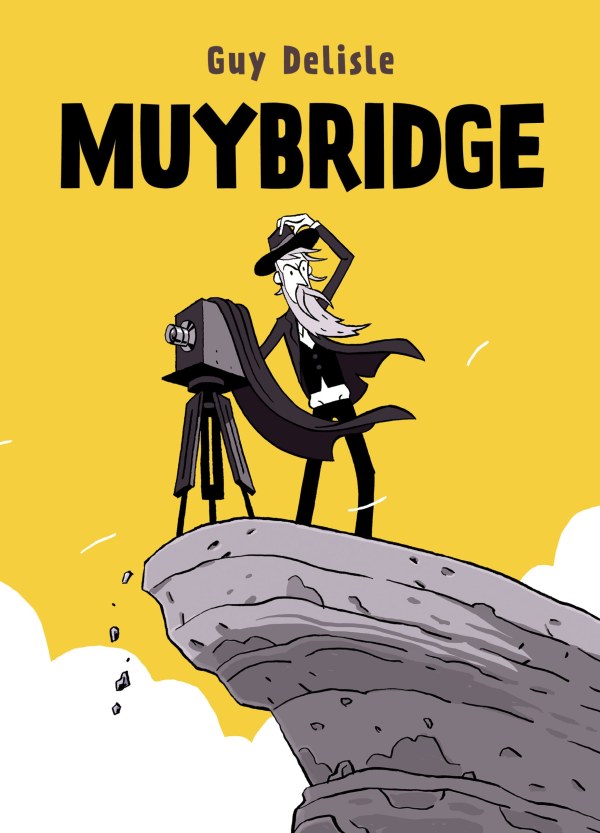 41. Muybridge
Writer/Artist: Guy Delisle
Publisher: Drawn and Quarterly
Solicitation: How do you capture a changing world in the blink of an eye?
Sacramento, California, 1870. Pioneer photographer Eadweard Muybridge becomes entangled in railroad robber baron Leland Stanford’s delusions of grandeur. Tasked with proving Stanford’s belief that a horse’s hooves do not touch the ground while galloping at full speed, Muybridge gets to work with his camera. In doing so, he inadvertently creates one of the single most important technological advancements of our age—the invention of time-lapse photography and the mechanical ability to capture motion.
Critically-acclaimed cartoonist Guy Delisle (Pyongyang, Hostage) returns with another engrossing foray into nonfiction: a biography about Eadweard Muydbridge, the man who made pictures move. Despite career breakthrough after career breakthrough, Muybridge would only be hampered by betrayal, intrigue, and tragedy. Delisle’s keen eye for details that often go unnoticed in search of a broader emotional truth brings this historical figure and those around him to life through an uncompromising lens.
Translated from the French by Helge Dascher & Rob Aspinall, Muybridge turns a spotlight on what lives in the shadow of an individual’s ambition for greatness, and proves that Eadweard Muybridge deserves to be far more than just another historical footnote.
Why it Made the List: Technology and art had a very back and forth relationship. As technology advances and new types are introduced there is often concern it may negatively impact art or even render it absolute. We certainly see that now with the concerns of AI and what it will do and has done to artists. These types of issues are not new and as the invention of the photograph had painters concerned their role in shaping culture would be forever diminished. There are lot of factors within this conversation which is why Guy Delisle’s biography of Eadwear Muybridge is such a useful work as this issue is solidified with the story of one man’s existence.
Eadwear Muybridge may not be a name you know but you have no doubt felt and seen the impact of his work. Muybridge didn’t invent photography but he did help advance it in many areas. Many of those advancements were centered on the one time unattainable goal of capturing how a horse actually gallops. Something we do not even think about today, but was a hotly contested topic of Muybridge’s area.
It is within the pursuit the central theme of this work is found. Humanity has looked at horses and represented their movement in certain ways from cave drawings to canvases. All helped shape our understanding of nature but now technology can change that. To capture the truth Muybridge pulls from both art and tech along with science of invention to find a solution to this age old problem. In the end Muybridge’s answer is sequential storytelling, the art of showing specific moments in time and trying to fill in the gaps. The very type of storytelling utilized within this work.
Guy Delisle has long been a gifted storyteller in how he can take complex or longform subjects but break them down to their most essential parts. Delisle uses simple, clear lines without excessive detail. His drawings feel effortless, almost sketch-like, but always precise. This minimalism helps keep the focus on narrative rather than intricate rendering of unnecessary details.
With Muybridge’s life, Delisle had quite the figure to focus on. Muybridge did great things but by no means was a great man. Horrible husband, absent father, and maybe dabble in a bit of murder and yet his photos of Yosemite changed photography forever. That was just one of his many accomplishments. The reason this work is as effective as it is was due to Delisle capturing the entire picture of the good, the bad, and the indifferent. Like a good documentary Muybridge gives you fascinating information but also plenty to think about.
 40. Love Languages
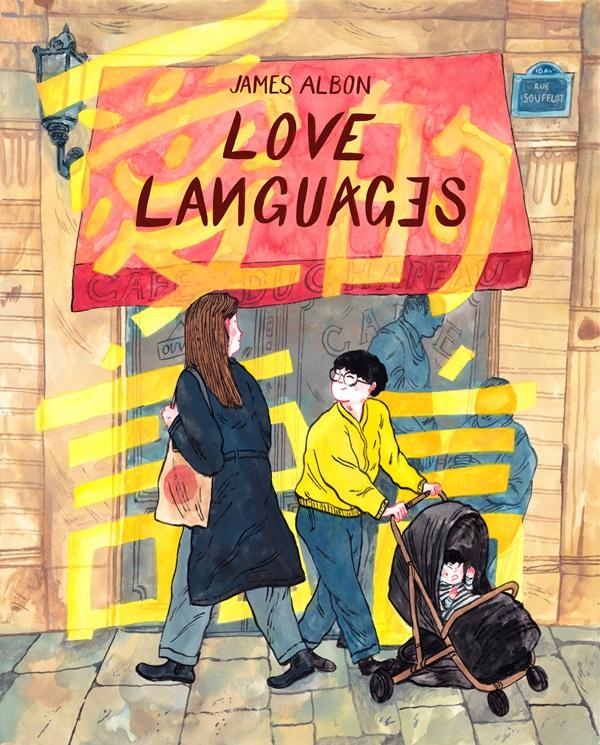 40. Love Languages
Writer/Artist: James Albon
Publisher: Top Shelf
Solicitation: Two foreigners in France reach across language barriers and turn each other’s lives upside down in this stunningly beautiful queer romance graphic novel painted in dazzling watercolor.
Sarah Huxley has moved from London to Paris, only to find a lonely life of corporate drudgery and disappointment — a far cry from her romantic expectations of the city. She collides with Ping Loh, a young woman working as an au pair to a wealthy family of Hong Kong expats, and the two bond over their shared struggle with the French tongue.
In museums and markets, over text messages and translation apps, Ping and Sarah slowly begin to learn each other’s languages, communicating in a rich and ever-shifting blend of English, French, and Cantonese. As their friendship blooms, so does their private dialect — a personal linguistic patchwork, a shared secret just for them. But when their feelings for each other start to deepen, they discover that the simplest words to translate can be the hardest words to say.
In these sumptuously painted pages, award-winning graphic novelist James Albon (The Delicacy) presents a dazzling love story about cross-cultural connection, the bewildering sensation of feeling one’s brain rewrite itself, and the intoxicating rush of the foreign becoming familiar.
Why it Made the List: Language is perhaps the greatest invention in the history of humanity. For one it has allowed humanity to cultivate vital parts of society like structure and culture. But language can also be a barrier when a common tongue is not shared between two people, which makes a connection that goes beyond language all the more special. Such is the case with James Albon’s latest graphic novel Love Languages.
The story follows Sarah Huxley who has moved from London to Paris due to her Corporate job that is slowly and strategically removing her soul from her body. She finds some hope in life due to a chance encounter with Ping Loh who has moved from Hong Kong to be an au pair for a Wealthy Family.
They are two outsiders that find a bond through their shared experience even with the complexity of a language barrier. The use of language is where the book shines utilizing lettering in a creative way to showcase that variety of languages being spoken with the same conversation. Also finding ways to demonstrate what was said and what was meant to be said can differ. A simple but effective tool to get into the minds of the characters in a way only comics can.
When you pair that with Albon’s artwork that renders the world in away that is both authentic the beauty of Paris as well as being able to capture the doldrums of social isolation and its emotional toll you get one well crafted story. Differences can sometimes brings us to together on a personal level. On a grander scope those differences can lead to rejection from society from society when they are too much for some people.
Romance comes in all different shapes and sizes and even speeds. Albon takes a patient approach as we see this relationship develop to casual friendship to something much deeper. It perhaps gets to big with its ending but at least stays with the theme of finding connection through the barriers of life.
 39. Avengers in the Veracity Trap
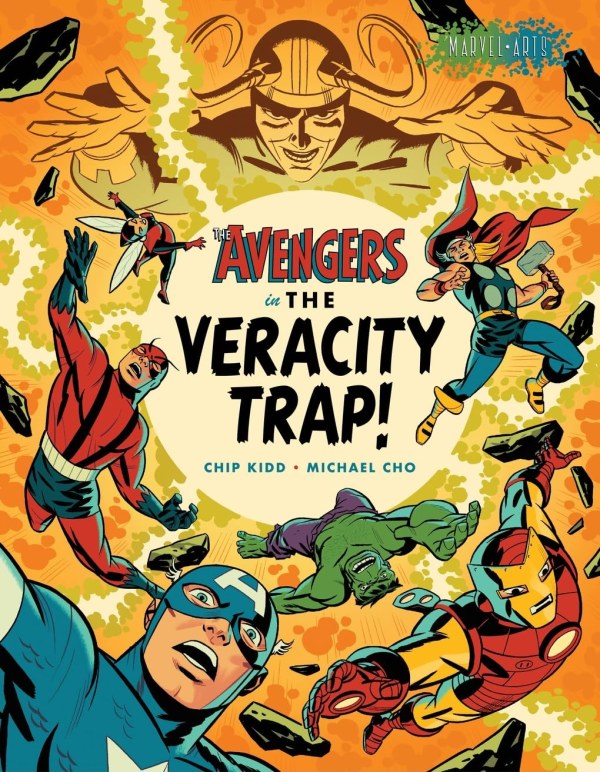 39. Avengers in the Veracity Trap
Writer: Chip Kidd
Artist: Michael Cho
Publisher: Abrams Books
Solicitation: What happens when Earth’s Mightiest Heroes learn who — and what — they truly are?
It starts with an epic battle in Asgard, as Loki, the god of mischief, comes into possession of a weapon of unimaginable power and assembles an army of otherworldly monsters in an effort to carry out his evil plans. Cue the Avengers — Captain America, Iron Man, Thor, Hulk, Giant-Man, and the Wasp — who meet this horrifying throng of beasts head-on as a thrilling, knock–down drag-out fight ensues.
But when the smoke clears, what appears to be a typically raucous comic book take–down is revealed to be something very, very different — and very, very terrifying. And this discovery threatens to destroy the Avengers in a way that Loki or any other foe never has before. Because this time the enemy is… the Truth.
Writer Chip Kidd and artist Michael Cho have created a mind–bending, visually sumptuous saga that takes the Avengers — and you, the reader — to places that challenge everything we thought we knew about super heroes and the very nature of heroism… villainy… and existence.
Why it Made the List: So one of the best Marvel comics of this year is not actually not be published by Marvel. Avengers in the Veracity Trap by Chip Kid and Michael Cho comes to us by Abrams publishing but is a pure Marvel story through and through.
It begins like a classic Marvel tale you would pick up from the newsstands in the 1960’s but eventually infuses a Modern twist. I think it is best to not know the major twist this eventually morphs into. So I spare details but say it stays true to the meta commentary and humor Marvel was know for right from the start. A simple tale grows into something with additional complexity that uses these godlike figures to ask the grandest of questions such as where identity comes from along with life’s purpose. All doing so while trying to take down that vile creature known as Loki.
For me the biggest selling point of this book is the Michael Cho art which is something that has been reserved for mostly covers over the last few years. So to get interiors from him is a treat. Cho colors the book as well and his work is like if you studied how to Draw Comics the Marvel Way and added in a modern sensibility. His pages are bold with vibrant colors, expressive character work, and bombastic action. No doubt this entire comic was a love letter to Jack Kirby and it pays homage in the grandest of fashion.
Avengers in the Veracity Trap is Marvel comics being Marvel comics. A story that is able to find that balance that will appeal to the oldest of Marvel fans along with those who may be reading their first Marvel comic ever. What is old is new again as this serves to show how to take what worked and add in something new. A lessen learned that would benefit all comics of every shape and size.
 38. The Power Fantasy
 38. The Power Fantasy
Writer: Kieron Gillen
Artist: Caspar Wijngaard
Publisher: Image Comics
Solicitation: “Superpowered.” You have certain preconceptions. They’re incorrect. Here, that word has a specific technical definition. Namely, “any individual with the destructive capacity of the nuclear arsenal of the U.S.A.”
There are six such people on Earth. The planet’s survival relies on them never coming into conflict.
Come dance to the ticking of the doomsday clock with KIERON GILLEN (THE WICKED + THE DIVINE, DIE) and CASPAR WIJNGAARD (HOME SICK PILOTS, ALL AGAINST ALL) in the first collection of this new, critically adored, sell-out epic.
Why it Made the List: Is there really anything left to do with superheroes that has not been done before time and time again? Apparently yes. The Power Fantasy takes the idea of superheroes being weapons of mass destruction to the final degree. Now it is not that the ideas within this series has never been explored before. What makes it standout is the approach.
This is not a simplified take of good vs evil as the morality within these figures is much more complex. You have six individuals who all have the power of a god that could destroy the world in some way. Each has their own specific wants, needs, and deep desires. To maintain reality they are forced to maneuver throughout life with a delicate touch. If not it will quickly topple the unstable jenga tower the world has become.
I could see some not connect with the prolonged philosophical discussions this tends to get into regarding the complications of determining what is moral when there are no right choices left. Personally I have found those deep dives quite fascinating.
Caspar Wijngaard has a style that has the elements you would expect for a superhero tale but adds a lot more. Characters are boldly drawn along with giving them features not typically associated with the most powerful entities on earth like a graying beard or a sharp stylish scarf.
If you are a person who has enjoyed Kieron Gillen work on the X-Men, especially during the Krokoa era you find a lot to like with this as well.
 37. Lebanon Is Burning And Other Dispatches
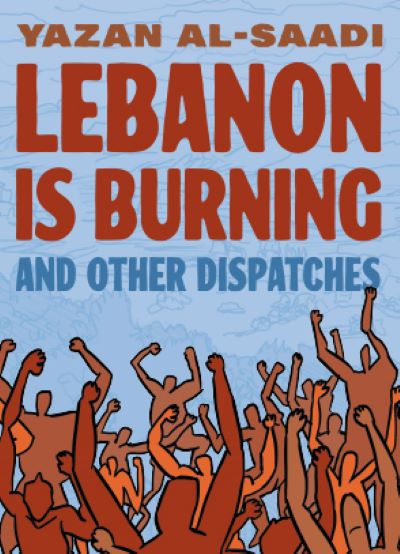 37. Lebanon Is Burning And Other Dispatches
Writer/Artist: Yazan Al-Saadi, Tracy Chahwan, Ganzeer, Ghadi Ghosn, Omar Khouri, Sirène Moukheiber, Hicham Rahma, and Enas Satir
Publisher: Graphic Mundi
Solicitation: Voices from the Middle East on the fight for self-determination.
Much of the present discourse about the pro-democracy Arab uprisings of 2011 paints a bleak picture of their defeat. But the truth is more complicated, and moments of struggle and inspiration still recur despite the overwhelming odds against the movements’ success.
This collection of short comics documents the political and social unrest in the Middle East during the 2010s, in such places as Lebanon, Egypt, Yemen, Palestine, Sudan, and Bahrain. A collaboration between writer and journalist Yazan Al-Saadi and a lineup of stellar cartoonists from the region—Tracy Chahwan, Ganzeer, Ghadi Ghosn, Omar Khouri, Sirène Moukheiber, Hicham Rahma, and Enas Satir—this graphic reportage serves as a witness to an era of counterrevolutionary resurgence in which entrenched powers clashed with the people’s struggle for self-determination.
Why it Made the List: I am a huge fan of comic book journalism. When a comic creator is not just telling a story but using the medium to research an important topic and spread awareness and vital information through the sacred tradition of sequential art. Lebanon Is Burning And Other Dispatches does exactly that in a way I have rarely seen.
This is not the work of one creator, but rather an anthology story that brings together artists and journalists from across the world. Stories from Lebanon, Egypt, Yemen, Palestine, Sudan, and more are covered. Using a large variety of styles they tell the tale of how cartooning can be used to bring to life the social unrest that is happening in the world.
Considering this is a book that may interest those that are not typical comic fans they added some key details that should prove helpful. Each installment includes a panel by panel breakdown regarding what was being communicated so the understanding is clear. On one hand it provides key information while also giving some insight to the comic book creation process.
 36. You Must Take Part in Revolution
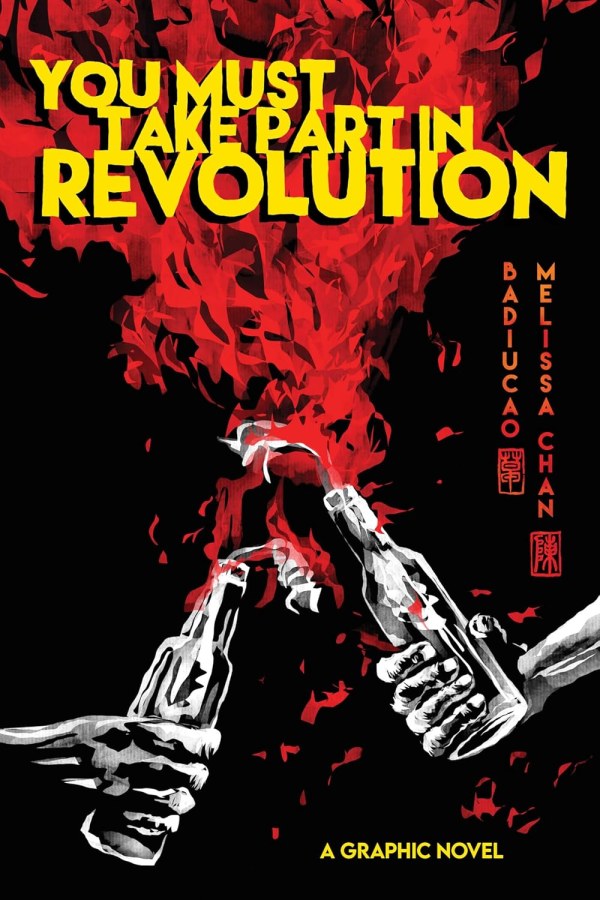 36. You Must Take Part in Revolution
Writer: Melissa Chan
Artist: Badiucao
Publisher: Street Noise Books
Solicitation: From Emmy-nominated journalist Melissa Chan and esteemed activist artist Badiucao comes a near-future dystopian graphic novel about technology, authoritarian government, and the lengths that one will go to in the fight for freedom.
It’s 2035. The US and China are at war. America is a proto-fascist state. Taiwan is divided into two. As conflict escalates between nuclear powers, three idealistic youths who first met in Hong Kong develop diverging beliefs about how best to navigate this techno-authoritarian landscape. Andy, Maggie, and Olivia travel different paths toward transformative change, each confronting to what extent they will fight for freedom, and who they will become in doing so.
A powerful and important book about global totalitarian futures, and the costs of resistance.
Why it Made the List: I mentioned previously how I enjoy comic book journalism. So going into this knowing it was written by Melissa Chan who is an award- winning journalist I was interested in seeing what approach was being taken. Now this is not a piece of journalism. Rather it is a fictional story taking place in a near future where the world is under dystopian government control. US and China are at war causing their governments to clap down even further.
When I think back to this book what comes to mark are the stark black pages. It is a world of shear bleak existence with the only color able to maintain being dull red and yellows. Showing that even those that wish to hide in plain sight cannot escape from what is happening no matter how hard they try.
Some may argue the messaging here is a bit heavy handed and I cannot say that is incorrect. Influences from classic dystopian future tales from George Orwell to Ray Bradbury are etched into the fabric of this book. I would argue though we are in a time and place where we need people to lean in hard with their messaging because it may be the only way to break through. It also shows how messy Revolutions are with competing interests that led to self inflicted wounds. You Must Take Part in Revolution is as much of a warning as it is a tool of inspiration.
35. Teenage Mutant Ninja Turtles
 35. Teenage Mutant Ninja Turtles
 Writer: Jason Aaron
Artist: Chris Burnham, Cliff Chiang, Juan Ferreyra, Joëlle Jones, Rafael Albuquerque
Publisher: IDW
Solicitation: The TMNT are back in this new series that provides a perfect jumping-on point for new fans!
The Teenage Mutant Ninja Turtles have all left New York to pursue their own interests, but gathering forces will pull them back together in this first arc of a new ongoing series that collects the prelude story “Long Way From Home” and issues #1–6 by superstar writer Jason Aaron and an all-star lineup of artists, including Joëlle Jones, Rafael Albuquerque, Cliff Chiang, Chris Burnham, Darick Robertson, and Juan Ferreyra!
Raphael is in prison. Michelangelo is living in Tokyo, where he’s become a TV star. Leonardo is traveling the world in search of peace. Donatello is trapped in a mutant zoo and forced to fight rich men looking for a thrill. And what has been going on in New York while the Turtles are scattered across the globe?
Why it Made the List: This year we got a relaunch of the IDW Teenage Mutant Ninja Turtles run. I know fans of that series took issue with restarting at a new number one considering everything that has been built at this point. Worried it would toss away everything that had been built. As someone who is very far behind with that run I cannot speak to how much was left behind. However, I would argue it was worth it for what we got.
This series began with one-shots that focused on each specific turtle and their current state. The turtle family was broken and it showed where that took the brothers. Each issue also had the gift of being done by some of today’s best artists. As a newer reader it was a helpful way to step back in without feeling lost, yet also realizing this was not an era that was starting from scratch.
Juan Ferreyra coming onto art duties was when this series hit its highest gear. Ferreyra is a master of intricate page layouts that take scenes to another level of dynamic entertainment. He will take something as simple as a Turtle climbing up the side of a building and find a new angle or approach to it that will give it so much life. My only complaint with this run is that it ended so soon. It felt like they just got to where they were building towards only to hand the reigns over to another creative team. Still, going to appreciate what we got and hope for the best in future runs.
34. Daredevil: Cold Day in Hell
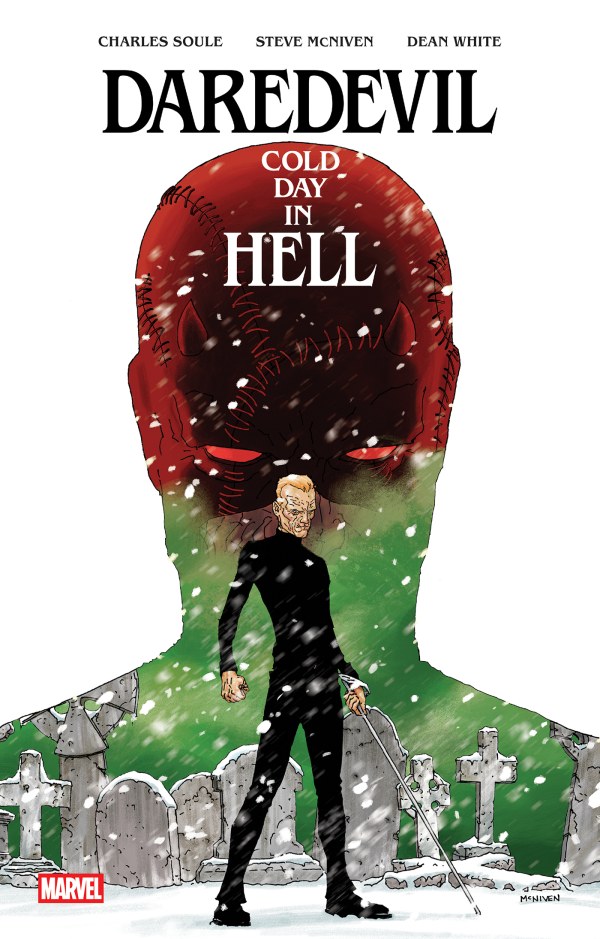 34. Daredevil: Cold Day in Hell
 Writer: Charles Soule
Artist: Steve McNiven
Publisher: Marvel
Solicitation: Years into the future, a powerless Matt Murdock is no longer Daredevil — but he’s still the Man Without Fear!
The superstar creative team of Charles Soule (Daredevil, Star Wars) and Steve McNiven (Civil War, Old Man Logan) reunite to bring forth a dystopian future vision of Daredevil and the death knell of a once great city! The stellar creative team of DEATH OF WOLVERINE (Soule and McNiven) reunites for a bold future vision of Daredevil, introducing a grizzled, older version of Matt Murdock! Matt may no longer have his incredible abilities, but he’s still doing whatever he can to help those in need in a city broken beyond repair. And he’ll finally be able take the fight to where it matters most when catastrophe strikes, causing his powers to miraculously return.
With no one by his side, Daredevil has little chance against the evil permeating every corner — until Captain America entrusts him with a mission to safeguard the world’s only hope!
Why it Made the List: There is something about Old Dude superhero stories that just tend to work. From Dark Knight Returns to Old Man Logan to even TMNT’s The Last Ronin. Seeing a once classic hero a shell of their former self leads to instant drama it appears.
This was Charles Soule channeling his inner Frank Miller and Garth Ennis as this story had a harder edge and more distinct violence that I am used to seeing from him. Looking at his past Daredevil work you will not find a lot of similarities in how he approached this story. And I say that as a person who was a major fan of his run.
Steve McNiven was the star of the show here and that was by designed. They mentioned how they went back to classic Marvel style to create this story and that freedom let McNiven show he is still a master craftsman.
Fitting a story about a man coming out of retirement to show he still has the special gift is drawn by an artist who is doing a similar action. We even got McNiven to color the first issue as well. He too seemed to take this as an opportunity to try a style very different from normal. When you compare this to Old Man Logan, which he also drew, he used a leaner line and sketchier finish. Clearly try to honor the legacy of individuals like Frank Miller without just trying to repeat his style.
I wish Marvel would do more of this as the year before we got Avengers: Twilight which once again was one of their best books of the year. Now I do not just mean stories about elderly superheroes. Although, that does seem to work quite well. What I mean are books where they allow two talented creators to do their thing without any major confides to the rest of the Marvel Universe. What we used to get from imprints like Marvel Knights on the regular. It would do Marvel and the comic book world a ton of good.
33. Redcoat
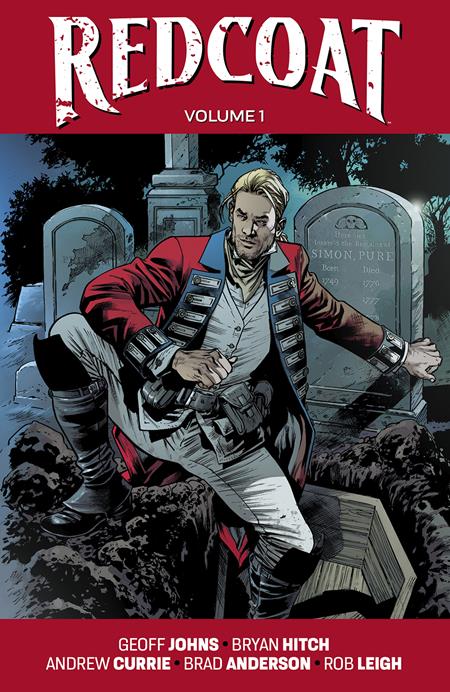 33. Redcoat
 Writer: Geoff Johns
Artist: Bryan Hitch
Publisher: Image Comics
Solicitation: IMMORTAL. MERCENARY. KIND OF A TOOL.
British soldier and all-around rogue Simon Pure has led quite an exciting life. Or lives, really.
In this volume, Simon crosses paths with some of America’s greatest figures… and one mystery man who absolutely despises Simon.
In the late 19th century, Simon has his annual meet-up with his good friend John Chapman — aka Johnny Appleseed — and an unexpected calamity awaits them. He also meets the striking and skilled sharpshooter Annie Oakley, who always hits the bullseye… especially the one in Simon’s heart.
And during the most desperate time of America’s Civil War, a mysterious force threatens to turn the tide of key battles by handing the Confederacy an unthinkable victory! Only Simon and the enigmatic new American Myth known as The Northerner stand in their path. But can these two unlikely soldiers put aside their differences long enough to stop a catastrophe?
Why it Made the List: Ghost Machine has given us plenty of great series from Geiger to Rook Exodus, Hyde Street, just to name a few. The book I have found connection to the most though has easily been Redcoat.
A big reason is how so many issues are single issue stories so there is more meat on the bone compared to other books within Ghost Machine. Other books feel like issues that continuously point to something grander they have not quite gotten to yet. Reading Redcoat the attention is directed inward to the story at hand. Either approach has its benefits as it is clearly a case of preference and single issue stories are catnip for me.
Simon Pure is quite the character. He is an immortal with self-doubt and a difficult time believing he is a good person. Showing that even if you live for 100 years, self-esteem is not guaranteed. To help him in this journey, he has been meeting different folk heroes including Johnnie Appleseed and Annie Oakley. Each encounter gave us more insight into the development of Pure as a person.
Bryan Hitch appears to have found a fountain of youth because he’s been doing some of the best work he has done in years. He’s been known for a long time for his cinematic style but what impressed me in this series is his character work. It is those small moments that make this book stand out. One of his greatest issues was when they depicted the Washington D.C. fire that occurred during The War of 1812. Hitch, along with inker Andrew Currie and colorist Brad Anderson brought that event to life as if we were seeing it happen for the first time.
32. Sakamoto Days
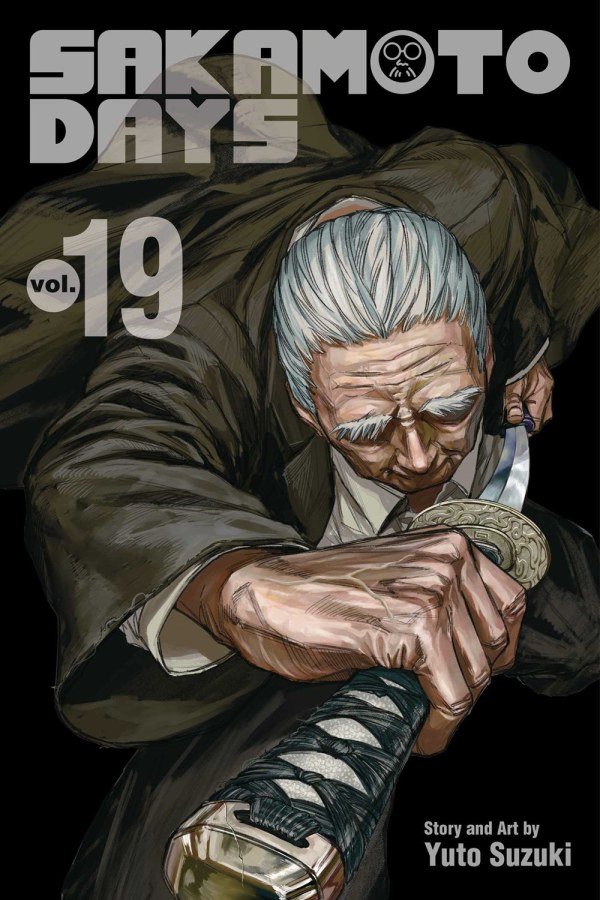 32. Sakamoto Days
Writer/Artist: Yuto Suzuki
Publisher: VIZ Media
Solicitation: Kill some time with former hit man Taro Sakamoto!
Taro Sakamoto was once a legendary hit man considered the greatest of all time. Bad guys feared him! Assassins revered him! But then one day he quit, got married, and had a baby. He’s now living the quiet life as the owner of a neighborhood store, but how long can Sakamoto enjoy his days of retirement before his past catches up to him?!
When Slur takes what should be a lethal wound, he transforms…suddenly manifesting Akao’s personality? Sakamoto and Nagumo are baffled to encounter what seems to be their long-lost friend, and the trio attempts to flee from the JAA. But when they come face-to-face with their most dreaded opponent, the Assassin Exhibition of the Century reaches its climax!
Why it Made the List: There are not a lot of current Manga series I am caught up with so I am sure there are ones that people say are better than the ones I have chosen for this list. I am all for people letting know know what I missed because I am always looking for new books to get into. Sakamoto Days is one of the few current Manga I am caught up with because it lands squarely within my sensibilities as a reader.
As mentioned on this list already stories about Hitman just trying to live a normal life scratch an itch I did not know I had. It also helps that Sakamoto Days does not take itself all that seriously. Now the comedy picks its spots much more now than it did when it first began but still the general tone still remains.
Plus the action is as entertaining as ever. I love how you have these characters that clearly can do things beyond the capabilities of human achievement and it does not try to bother to overtly explain it. This is simply a world where physics and laws of nature do not seem to fully apply to Assassins and that’s okay. There’s no toxic sludge or mutant gene. It throws all the exposition to the side to get to telling the story.
 31. Out of Alcatraz
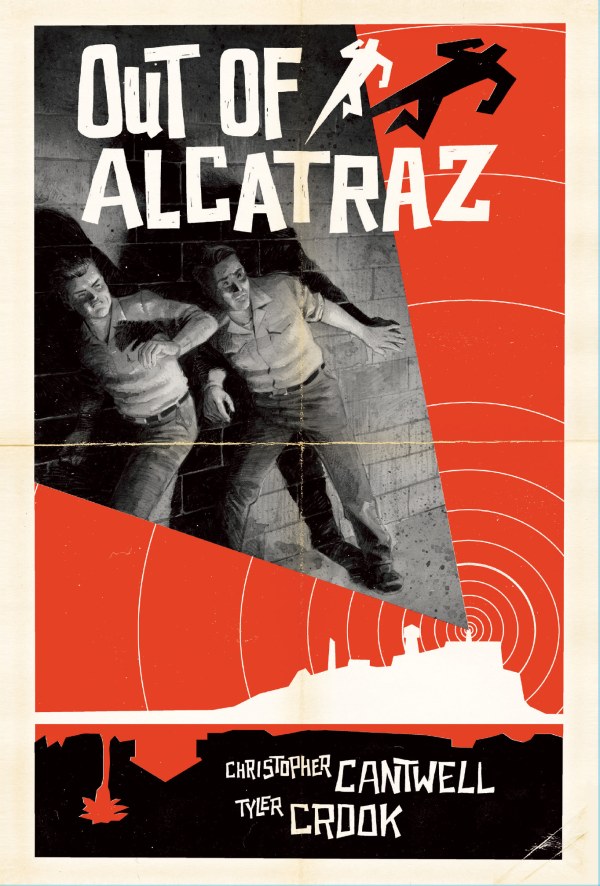 31. Out of Alcatraz
Writer: Christopher Cantwell
Artist: Tyler Crook
Publisher: Oni Press
Solicitation: Convicts Frank Morris and Clarence Anglin have washed ashore in San Francisco after surviving their infamous escape from Alcatraz Federal Penitentiary in June 1962. They soon meet their gruff and disappointed handler, a mysterious young woman who’s also running from something, and hope to quickly get their way north to the border — if they can even make it out of Modesto alive. As a dogged federal manhunt and chance encounters threaten the desperate convicts, everyone involved is about to discover the same bloodstained truth: life on the run is an even more hellish prison than Alcatraz could have ever been.
Why it Made the List: Out of the frying pan and into the fire is the idiom that could describe the journey of the characters in this series. Out of Alcatraz takes inspiration from the true life story of the prisoners who escaped Alcatraz never to be seen again. This explores that idea that maybe at least some of them made it out safe. Safe is a relative term because trouble has a way of finding them from the moment their feet touch land.
Christopher Cantwell and Tyler Cook are not a creative team I would have put together, and that’s why I’m not an editor. Cook has long been a great artist and I foolishly tend to just associate him with the horror genre. A book like Harrow County is just hard for me to shake. Clearly his style can work just about anywhere because this is a straightforward crime caper with no supernatural elements to be found. Cook plays triple duty as a colorist and letterer as well and it does not take long to see he has full command of the page.
We do not get crime books like this often that do not have Ed Brubaker and Sean Phillips name on the cover. Happy to celebrate a work from different creators that can belong in the same category of their previous work. This takes a real life story, rumors of what may have happened, and uses those to make adventure that keeps you engaged with a willingness to keep the direction changing.
 30. More Weight: A Salem Story
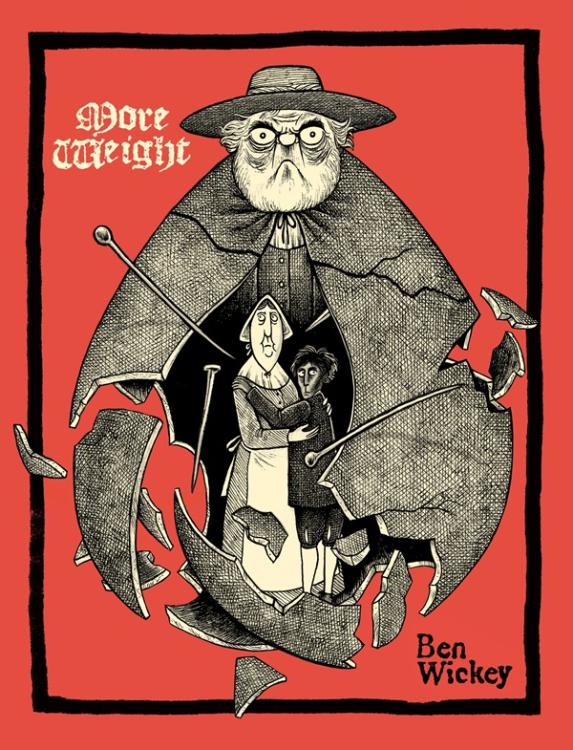 30. More Weight: A Salem Story
Writer/Artist: Ben Wickey
Publisher: Top Shelf
Solicitation: “Every word is an accusation… and every whisper kills.” This staggering graphic novel explores the infamous Salem witch trials and the long shadows they cast more than 300 years later.
1692 is a year of terror. In Salem, Massachusetts, Giles and Martha Corey are forced to confront their troubled past when accusations of witchcraft plunge their community into a violent moral panic. Based upon true events, and set in three centuries, More Weight is a unique inquiry into the Salem witchcraft tragedy and the misunderstood city now synonymous with it.
Why it Made the List: We have all heard of the Salem Witch trials. They have been depicted in every medium possible. They are even part of the common lexicon whenever a person feels like they are being falsely accused of something. The question is why do we know so much about these trials? What exactly happened to make those events so engrained into our culture? How much of what we know is actually true? Ben Wickey’s More Weight: A Salem Story explores that and so much more.
This is a dense tail spanning hundred of years and taking up nearly five hundred pages. I am impressed with the sheer amount of research that had to go into getting this made before pen hit paper. Now to be clear this is not a docu-comic simply depicting events as they happened. Part of the story are ghosts traveling through the city of Salem looking back at what happened so clearly it is not going for a one to one depiction. Rather it takes what happened and tries to clear up many misconceptions regarding those events.
One of the key aspects to Ben Wickey’s artwork was the way he renders eyes. These bulging oblong circles that sat upon characters’ faces in a way that gave you so much insight into their character and emotional state. Those eyes will not escape me.
When you learn where the title comes from it was one of the most powerful and brutal moments I read in comics this year. This is a work that shows how we can learn so much about ourselves by looking at the past. How the failures of yesterday fuel the frustrations of today.
 29. The Dissident Club
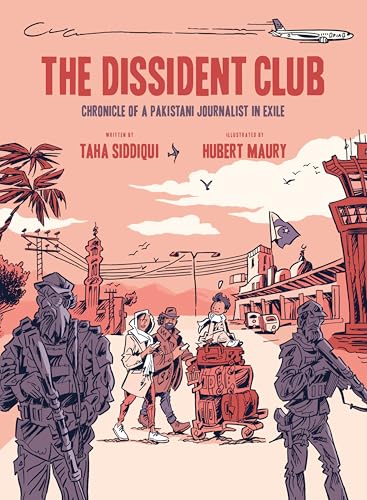 29. The Dissident Club
Writer/Artist: Taha Siddiqui
Publisher: Arsenal Pulp Press
Solicitation: In Islamabad in 2018, Pakistani investigative journalist Taha Siddiqui is kidnapped at gunpoint and barely escapes being killed. He flees the country on the first plane to France with questions left unanswered: What motivated the attack? Was the tyrannical Pakistani military involved?
The Dissident Club is an action-packed graphic memoir about Islamic politics, complex family dynamics, and one man’s dedication to truth and principle. With illustrator Hubert Maury, Siddiqui, winner of the prestigious journalism award Prix Albert Londres, tells the story of his intriguing life and career, beginning with his childhood in Saudi Arabia and Pakistan under the stern gaze of a fundamentalist Islamic father. Siddiqui rebels against his religion, but his personal freedom is constrained by strict Islam, especially after his father joins a jihadi mosque.
Following the Gulf War and then the shock caused by 9/11, Siddiqui enters university and begins his personal emancipation. He becomes a journalist, but as he reveals the crimes of the Pakistani military, he learns the hard way that journalists are moving targets. Once in Paris, he opens the Dissident Club, a bar dedicated to helping political dissidents from around the world.
An expansive Pakistani coming-of-age story, The Dissident Club documents Siddiqui’s experiences as a young man fighting for truth and justice against the harsh backdrop of Islamic fundamentalism and corruption.
Why it Made the List: Pakistani-born journalist Taha Siddiqui was kidnapped by armed guards one day on his way to the airport. Knowing his life was in danger he saw a moment to escape, took advantage, and eventually fled to Paris with his family. The comic The Dissident Club chronicles his life to explain and what brought him to that moment.
This is part memoir part piece of journalistic design as Siddiqui looks back as his life growing up in Pakistan as well as his time spent in other countries including Saudi Arabia. The insight here is remarkable as we see Siddiqui witness his father and subsequently his family becoming more radicalized as religion becomes a more dominant part of their lives.
There is priceless look into a world that is often just shown from a far in the Western world. Understanding the key nuances of Sunni and Shiite branches of the Muslim religion and how those differences can lead to major strife. Why America is seen has such a destructive force by so many and how differently many reacted to world events like 9/11. Are all provided within this text.
What may be far more fascinating though are the similarities. How growing up you have to deal with the similar issues from going to classes you don’t care much about, the struggle to hide things from your parents like relationships they wouldn’t approve of, or the use of weed to wind down from the stress of the world. Teenagers still need to teenage no matter the location.
Hubert Maury is the artist here and his style worlds well with this tale. This is a story of memory and with that even the best isn’t full of exact detail. His style is classic cartooning using key lines to get to the specific emotions of each scene. I will say this is a book packed with a large contingent of people throughout multiple eras in their life and yet you can always tell who is who. That is not an easy thing to pull off especially when you can’t use superhero costumes to help differentiate individuals from one another.
As has often been stated we live in an era when speaking truth to power through proper journalism is as vital. Taha Siddiqui’s story shows you both how vital that is but also what it can cost you. In Siddiqui’s sake that meant losing connection to those he was closest to and eventually endangering the lives of himself and his family. While the knee jerk reaction may be to retreat in the face of those consequences. It is hard to blame those that do. So many like Taha Siddiqu endured. The Dissident Club shows the power of those voices and why they should be listen to even more.
 28. SPENT: A Comic Novel
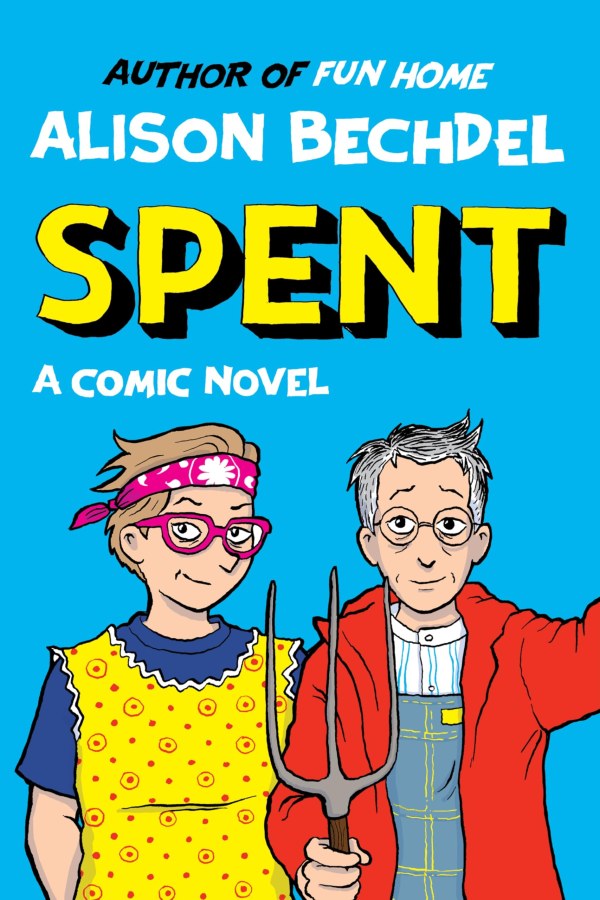 28. SPENT: A Comic Novel
 Writer/Artist: Alison Bechdel
Publisher: Mariner Books
Solicitation: The celebrated and beloved New York Times bestselling author of the modern classic Fun Home presents a laugh-out-loud, brilliant, and passionately political work of autofiction.
In Alison Bechdel’s hilariously skewering and gloriously cast new comic novel confection, a cartoonist named Alison Bechdel, running a pygmy goat sanctuary in Vermont, is existentially irked by a climate-challenged world and a citizenry on the brink of civil war. She wonders: Can she pull humanity out of its death spiral by writing a scathingly self-critical memoir about her own greed and privilege?
Meanwhile, Alison’s first graphic memoir about growing up with her father, a taxidermist who specialized in replicas of Victorian animal displays, has been adapted into a highly successful TV series. It’s a phenomenon that makes Alison, formerly on the cultural margins, the envy of her friend group (recognizable as characters, now middle-aged and living communally in Vermont, from Bechdel’s beloved comic strip Dykes to Watch Out For).
As the TV show Death and Taxidermy racks up Emmy after Emmy—and when Alison’s Pauline Bunyanesque partner Holly posts an instructional wood-chopping video that goes viral—Alison’s own envy spirals. Why couldn’t she be the writer for a critically lauded and wildly popular reality TV show…like Queer Eye…showing people how to free themselves from consumer capitalism and live a more ethical life?!!
Why it Made the List: Anytime Alison Bechdel comes out with a graphic novel there is reason to get excited. I can also imagine that level of excitement brings with it a great deal of expectations. Spent appears to partially be a reaction to exactly that. How one tries to navigate their life as an artist knowing so much is expected from on an artistic, social, and economic level. Rarely do those levels share a common moral fiber.
Knowing her best known work Fun Home is a memoir made it seem like a natural choice to do another similar memoir just about where her life today. What is very clear though is that this is designed to be a semi true story that breaks away from reality. I will admit it took me far too long to realize that as I searched IMDB for the TV show that gets referenced here.
One of my biggest takeaways from this was how it represents the hypocrisy of us all. How we all have our certain beliefs and morals, yet there are certain times where we become compromised. Sure we care about workers rights and the environment. Sometimes you just want to order that product from Amazon because you had a day. Bechdel is willing to satirize herself as much as anyone.
It is that old conundrum of how to you rebel against the system when you are apart of that system now. Bechdel’s sense of humor and quick wit are as strong as ever as you uses this novel as retrospective on exploring that issue.
 27. Welcome to the Maynard
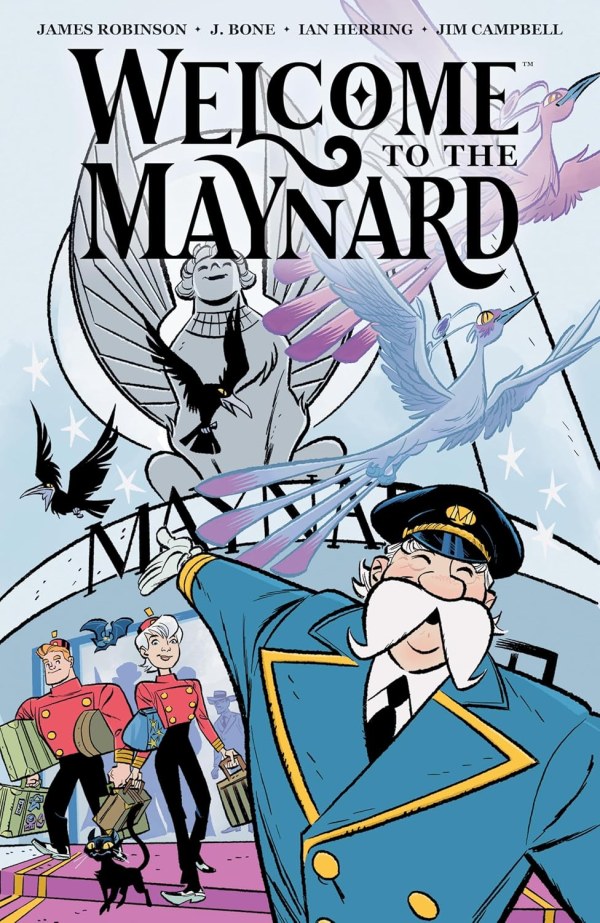 27. Welcome to the Maynard
Writer: James Robinson
Artist: J. Bone
Publisher: Dark Horse
Solicitation: Welcome to the Maynard! A grand hotel full of luxury and style…but where the guests are all wizards, witches and mythical creatures!
Enter a world of magic, mystery, thrills and fun.
Join Philippa (Pip) Dale as she begins her new job as a bellhop (and trainee house detective) at the exclusive Maynard Hotel for Wizards (and folks of a magical ilk). This opulent, amazing hotel exists right under the noses of everyday San Francisco, where real magicians, witches, mystical characters and fantastic creatures all come to stay.
However, Pip’s working days aren’t merely full of amazing sights and magical experiences, they come with thrills and dangers too. She must try to catch a magical hotel thief, although their strange choice of thefts suggests that murder is the ultimate goal. Can Pip solve the mystery of who the thief’s target is in time to save the intended victim? And at the same time, she must go about her other duties at the hotel almost all of which involve spells, enchantment, and drama of one kind or another.
Helping her are many fun and funny hotel employees, all of them with magic running through their veins too. The Maynard is a unique, special hotel where the strange and mystical come to stay. It truly is a place like no other, especially now Pip is on the case to liven things up even more.
Why it Made the List: Way back when I talked about Los Monstruos I mentioned how James Robinson would have been my writer of 2025 and this series is the biggest reason why. The story takes place in this magical hotel where a thief has been stealing random supplies for reasons unknown. It’s like an adult Pixar film with the amount of creativity that is placed in each issue and has the whimsy of something like Tin-Tin. James Robinson is showing a different side of himself as a storyteller and J.Bone’s cartoony style fits this story perfectly. As corny as it may sound the hotel becomes a character within itself and J.Bone does that with some full page layouts to show the magic of this land.
Probably my favorite page of the entire year happens within this series. It centers on a couple having dinner throughout the years. They are clearly madly in love with one another, and then we get the final panel that hits with a massive emotional gut punch. They were able to encompass the emotional impact of the start of Up into one single page.
The crazy thing is they did that with a character who was a side player for most of the story. Now I do not want to give people the wrong impression that this series is wrought with emotion, because for the most part it is a light fun affair. A book that is charming and gleeful. Considering how many books on this list are the opposite of that it’s a nice reprieve from reality.
 26. The Confessional
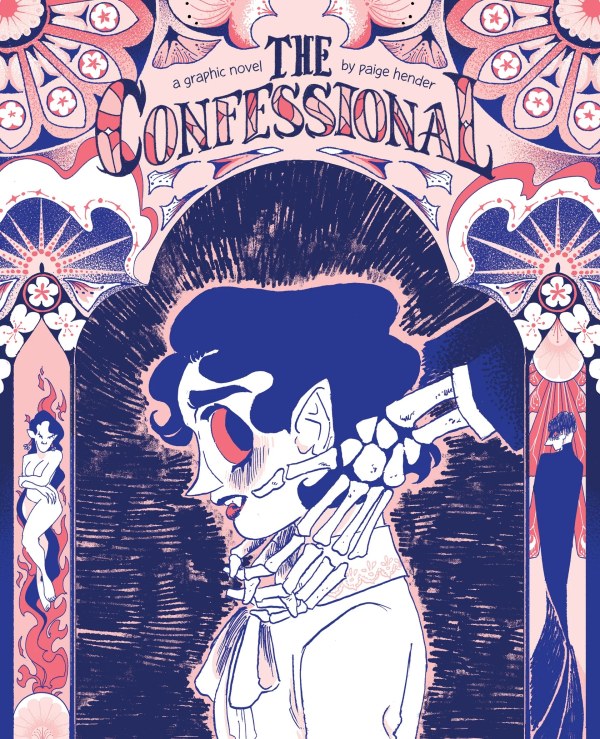 26. The Confessional
Writer/Artist: Paige Hender
Publisher: Silver Sprocket
Solicitation: In this compelling debut horror graphic novel, a newly turned vampire yearns for salvation in the arms of the priest who uncovers her secret.
New Orleans, 1922. Cora Velasquez lives with her sister and her own haunted memories in a speakeasy run by a vampire coven. Unable to bear the weight of her damned soul, she turns to Father Orville Thibodeaux, a charismatic priest and the object of her hidden desires. Their veiled courtship becomes deadly serious when he discovers her nature, and proposes a way to both slake her thirst and save her soul. So begins the charged dance between an all-powerful but unsure young woman, and the mortal man who claims to hold her fate in his hand.
A gothic story of adoration, power, and manipulation, lushly told in Art Nouveau-inspired illustration.
Why it Made the List: Who needs more Vampire stories? I always hate questions like that because the idea that any type of story or subject matter has hit its limit is quite the myopic way to view the art of storytelling. I say that because Paige Hender’s debut graphic novel The Confessional is a stylish and poignant story about the power of corruption using the lens of the Vampire myth.
Taking place in 1920’s New Orleans the story follows Cora a newly turned vampire that is still trying to learn how to adjust to her new life as a creature of the night. Living in a speakeasy-brothel surrounded by fellow vampires she has plenty of support around here although the person truly guiding her is an outside force. A priest, Orville Thibodeaux has become the person she confides with the most as her guilt for her recent sins leads her to confession for the hope of salvation. Thibodeaux promises salvation but his true intentions with Cora are far more insidious.
Cora becomes lost in a sea of influence as power dynamics play a major role within this story. By no means is Cora innocent as she does have blood on her hands, but much of that is due to a life she was forced into not one she chose. The allegories here are clearly not trying to hide as as it was a pointed choice to center much of this story within a brothel. Women taking the world as it is not the way they wish it to be.
Beyond that of course is the idea of what actual villainy looks like. Religion often plays a role within horror from casting out demons to crosses being used as weapons. Here the power that compels you is just as vile as those monsters lurking under your bed. A clear indication of how trust can be manipulated against the most vulnerable
Now I realize I am making this seem like this is just about the message and the story has been left behind which is not the case. For one Paige Hender brings this world alive with an effective color palette of reds, purples, and blues. Relying on the softer colors for the more tender moments to then overwhelms the page with harsh reds when the horror kicks into high gear. Hender’s character design have a more modern take but when mixed with Victorian and gothic fashion design it enhances this sense of clashing worlds.
So yes there is still plenty of room to tell new and intriguing stories centered on Vampires that speak to the issues of the day while telling a compelling tale of murder and suspense. It’s not about rewriting the rules of what it means to be a vampire but rather showing that evil is not based on what you are but what you do with the power you have.
Go to 25 – 1
(101 – 76 | 75 – 51 | 50 – 26 | 25 – 1)

chevron_leftPrevious page Next pagechevron_right

Be the first to leave a comment