


Game Room Centerpieces Worth Planning Around
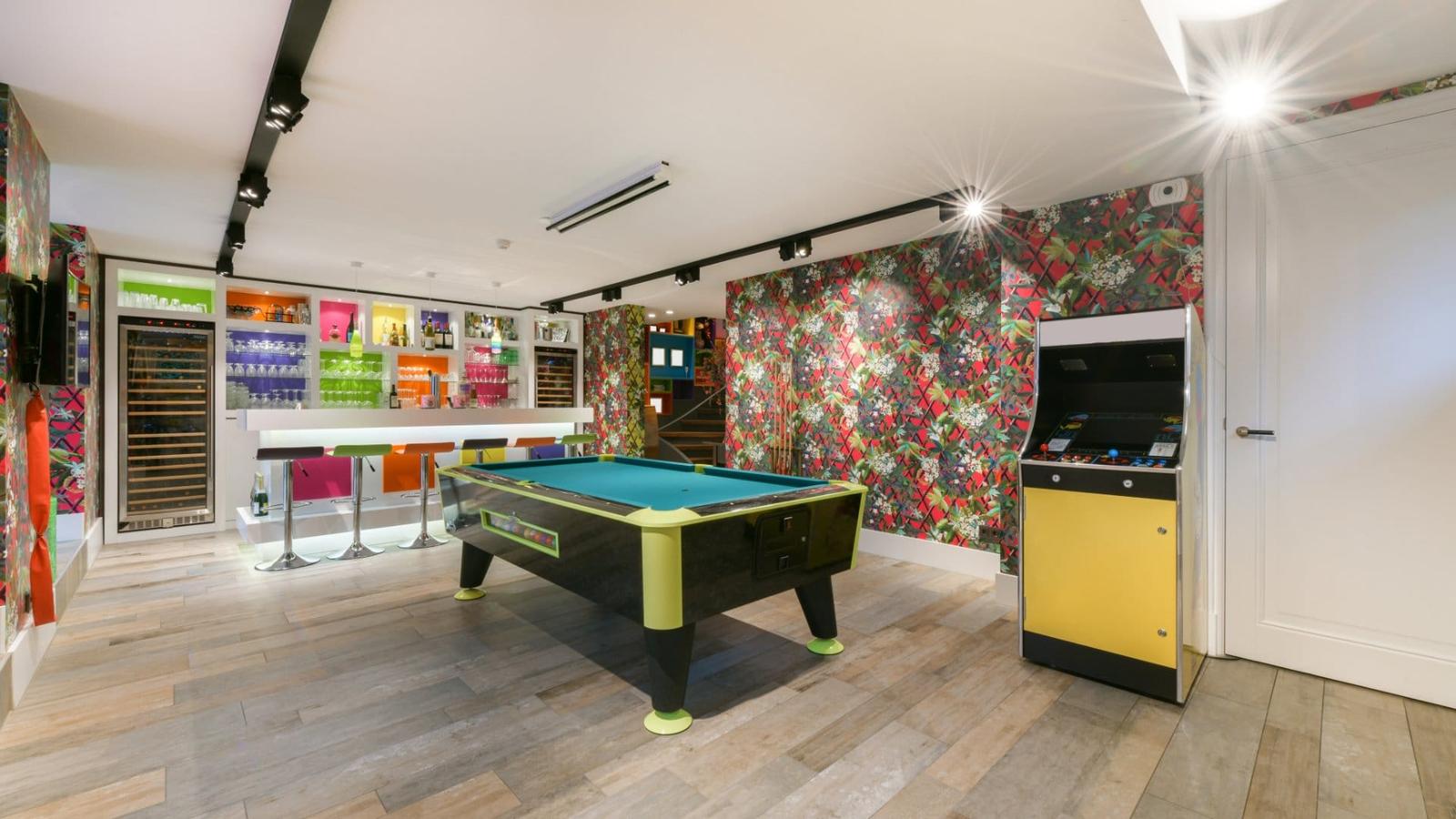
Every great game room has that one piece.
Maybe it is the pool table everyone gathers around. Maybe it is the arcade cabinet that makes the room feel like 1994. Maybe it is the racing sim rig that somehow turns one quiet corner into a full-on pit lane. Whatever it is, that centerpiece does more than fill space. It shapes the whole room.
That is why some centerpiece game room pieces are worth planning around before they take over the layout. A dream setup can become a headache fast if it blocks outlets or makes the whole room feel crammed. Before the room turns into a real-life puzzle game, here are the pieces that deserve extra thought.
Pool Tables
A pool table brings instant personality to a game room. It is social and timeless enough to sit comfortably beside arcade cabinets, consoles, movie posters, or collectibles.
It is also one of the least forgiving pieces to place incorrectly. The table itself is only part of the footprint. You need cue clearance on every side, enough space for players to move naturally, and lighting that does not throw strange shadows across the felt.
A pool table is also one of the few game-room pieces where planning means more than measuring, since you need to protect the slate, felt, and frame before it becomes the room’s main attraction.
If the floor is uneven or the table is rushed into place, gameplay can suffer. Plan the pool table first, then let the rest of the room work around it.
Arcade Cabinets
An arcade cabinet is not just decor. It is a playable piece of nostalgia, complete with glowing screens, side art, control panels, and the urge to chase one more high score.
The challenge is that cabinets are awkward before they are awesome. A full-size machine may look perfect against the wall, but first it has to make it through doorways and whatever narrow hallway stands between the truck and the game room.
Power access matters too. Nobody wants an extension cord stretched across the floor like an accidental tripwire. Cabinets also need enough room for players to stand comfortably without blocking the rest of the space.
Treat an arcade cabinet like both a machine and a display piece. Give it breathing room, and make sure people can actually play it without rearranging the room every time.
Pinball Machines
Pinball machines bring chaos in the best way. Lights flash, bumpers fire, the ball ricochets, and suddenly everyone is watching one person try not to drain again.
They also demand respect. Pinball machines are heavy and more mechanical than most game-room gear. They need stable flooring, proper leveling, and enough player space for people to play without bumping into a shelf or chair.
Maintenance access is easy to forget until something needs cleaning or repairs. If the machine is trapped between furniture, even a small fix becomes a much bigger project.
Noise is another factor. Pinball sounds amazing when the room is built for energy. It is less charm under a bedroom or beside a home office. Place it where the sound adds to the experience instead of creating a problem.
Racing Sim Rigs
A racing sim rig starts small. You might just have the wheel, pedals, and maybe a decent chair. Then comes the shifter, monitor stand, upgraded seat, button box, and cable setup that makes one corner look a lot more serious than expected.
That is why sim rigs need an honest footprint. Decide early whether the setup will be foldable or permanent. Casual players can use gear that stores between sessions, but a serious rig deserves a dedicated spot.
Screen distance is a big part of the experience. The display should feel immersive without being uncomfortable, and the seat should have enough room for easy entry and exit. Cable management matters too, because racing setups can get messy fast.
When done right, a sim rig becomes one of the most impressive pieces in the room. If it’s done poorly, it becomes a chair surrounded by wires.
Tabletop Gaming Tables
For board gamers, RPG players, card battlers, and miniature painters, the table is not just a “table”. It is the dungeon, battlefield, tavern, war room, and negotiation zone all in one.
That means size matters. A table that works for a casual board game can feel cramped once maps, minis, cards, dice trays, rulebooks, drinks, and character sheets hit the surface.
Seating clearance is just as important. Players need room to sit and play without knocking over a painted miniature that took hours to finish.
Lighting deserves attention too. You want enough visibility for cards and tiny details without making the room feel harsh. Nearby storage also helps keep sessions from starting with a search for everything you need to start playing.
A great tabletop gaming table creates stories. Give those stories enough room to unfold.
Display Walls
A display wall can turn a game room into a personal museum. Figures, statues, boxed games, helmets, props, LEGO builds, signed posters, and vintage toys all look better when they are treated like part of the room instead of overflow storage.
Start with support. One figure may not weigh much, but a full wall of collectibles, books, statues, or boxed sets adds up quickly. Lightweight shelving might work for smaller pieces, but heavier displays need stronger planning.
Sunlight is another silent villain. Direct light can fade your display wall over time. If rare items are going near a window, think about how you will protect them from getting damaged after a few months.
Dust control matters too. Glass cabinets and enclosed shelves can keep collections visible without making cleaning feel endless. Most importantly, leave room to grow. A collector’s “final shelf” is almost never final.
Plan for the Full Experience
Once you know which game room pieces are worth planning around, the rest of the layout gets easier. The goal is not to cram every cool thing into one room. The goal is to make the room work around the pieces that matter most.
Start with the path in. Can the item actually get into the room? Measure doors, stairs, halls, corners, and ceiling height—not just the wall where it will sit. Then check power access before everything is in place.
Clearance matters too. Pool cues, pinball players, tabletop chairs, cabinet doors, and racing rigs all need space around them.
Most importantly, decide what the room is really about. Is it a billiards room, retro arcade, tabletop dungeon, racing station, or collector showcase? Once the main attraction is clear, every other choice feels more intentional.
Build Around What Matters
The best game rooms feel effortless because the awkward stuff was planned first. Someone measured the path, checked the power, left space to play, and gave the coolest pieces room to shine.
Whether your dream setup revolves around a pool table, arcade cabinet, pinball machine, sim rig, tabletop table, or display wall, the rule is simple: build around the centerpiece before it takes over the room.
Because in any great game room, the coolest piece should feel like it belongs there, not like it spawned in the wrong place.


Be the first to leave a comment